
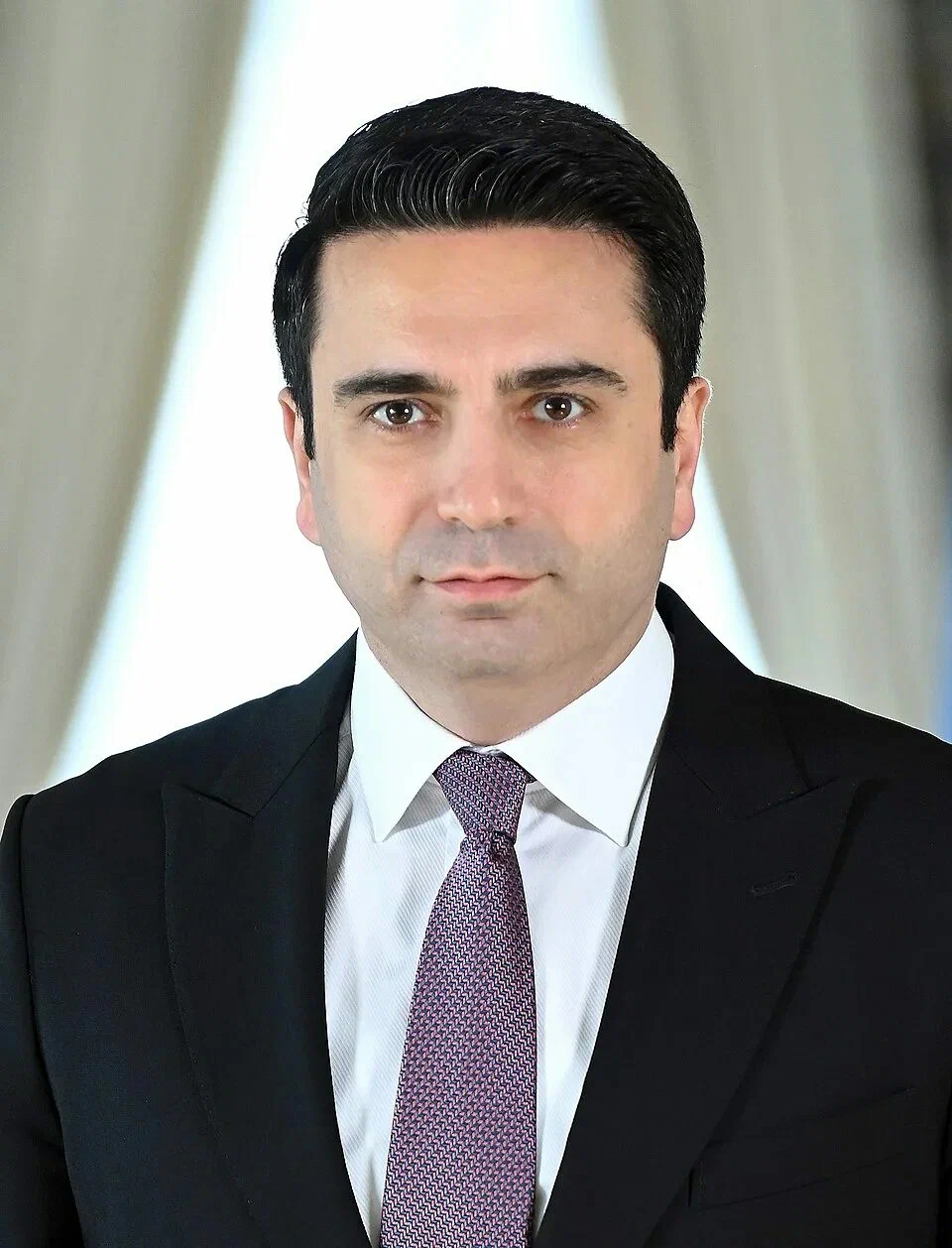
THE DENYING SPEAKER: FACTS, ACTIONS, AND LEGAL ASSESSMENT OF ALEN SIMONYAN’S ACTIVITIES
First: Declarations and Concealment of Data
Since 2018, Alen Simonyan’s income has increased sharply, from approximately 14.5 million drams per year to around 70 million drams. At the same time, his official salary accounts for only part of this amount. The bulk of the income is formed through bank transfers, rental income, and other sources, the origin of which is not disclosed in many cases.
At the same time, the following actions have been recorded:
- Systematic concealment of data concerning income, assets, and financial liabilities.
- Declaration of significant amounts of cash, reaching tens of millions of drams annually.
- Maintaining a debt of up to 53.8 million drams for several years.
- The absence of complete information on the wife’s income and property in a number of reporting periods.
In fact, this concerns a deliberate restriction of access to information that, within the meaning of anti-corruption legislation, should be public.
The legal assessment is clear: formally, these actions may be based on existing confidentiality provisions, but in their essence they contradict the principle of public accountability. Moreover, previously identified violations in the declarations (including inaccuracies and questions concerning the origin of funds) ended with nothing more than a disciplinary warning, which indicates the leniency of the sanctions applied and the absence of genuine accountability.
Second: Property Acquisition and Financial Transactions
In 2018, amid a relatively modest official salary, a Range Rover vehicle worth approximately 12 million drams was acquired. The origin of the funds used for the purchase became the subject of journalistic investigations. Later, claims were made about a possible connection between this transaction and representatives of the gambling business (Vigen Badalyan), which Simonyan himself denied.
Then, over the following years:
- Acquisition of an apartment through a mortgage loan from a bank connected to the family of a sitting member of parliament.
- Recurring bank inflows amounting to tens of millions of drams.
- Simultaneous maintenance of a high debt burden.
The legal issue here is not the fact of borrowing or acquiring property, but the combination of circumstances: the lack of transparency regarding the sources of funds, the interconnectedness of financial institutions, and the failure to fully disclose the data.
Third: Legislative Initiatives and Market Redistribution
In 2019, Alen Simonyan initiated amendments to the “Law on Games of Chance,” which sharply restricted the activities of betting companies in the offline sphere. As a result:
- The offline betting market was significantly reduced.
- The main activity shifted to online platforms.
- It was precisely in this segment that Vivaro (Soft Construct) held a dominant position, whose owners Simonyan had known long before the law was adopted.
After the amendments were adopted, the financial indicators of that company increased significantly.
Formally, the law was adopted in accordance with the established procedure. However, the legal assessment must take into account the conflict of interest: the presence of personal connections with market beneficiaries when initiating norms that alter the structure of the market. Even in the absence of direct evidence of lobbying, the situation itself meets the criteria of a potential conflict of interest.
Fourth: Business Environment and State Contracts
The Speaker of the National Assembly’s brother, Karlen Simonyan, held executive positions for short periods in a number of companies, including “Euroasphalt,” which:
- Actively participated in public procurement.
- Received contracts worth more than 22 billion drams.
- Worked under multi-year contracts with phased financing.
At the same time, the following have been recorded:
- 19 lawsuits against the company related to failure to fulfill obligations.
- Numerous attempts to initiate bankruptcy proceedings.
- Repayment of debts and withdrawal of lawsuits at later stages.
From a legal perspective, these facts indicate systemic problems in the fulfillment of contractual obligations. At the same time, continued access to state contracts points to the absence of an effective mechanism for selecting and monitoring contractors.
Particular attention should be paid to the structure of the companies:
- Coinciding registered addresses.
- Overlapping management structures.
- Participation of relatives and affiliated persons.
Such a configuration corresponds to characteristics of interconnectedness and requires examination from the perspective of compliance with anti-corruption restrictions.
Fifth: Development Projects and Associates
Persons with close personal connections to Alen Simonyan were involved in the Pallada Tsaghkadzor project, worth up to $50 million. At the same time:
- Construction began before the full package of permits had been obtained.
- Permit documents were formalized only after the work had already begun.
- One of the project participants had previously been declared bankrupt.
Despite this, the project was legalized after administrative sanctions.
Alen Simonyan himself denied any connection to the project, but the nature of the persons involved and their relationships with him provide sufficient grounds to examine the existence of indirect influence.
Sixth: Conduct in the Public Sphere
Instead of essentially providing explanations regarding the facts raised, the Speaker of the National Assembly takes the following actions:
- Files lawsuits against journalists.
- Publicly insults media representatives.
- Refuses to acknowledge even the need to discuss the questions raised.
From the perspective of legal culture, this constitutes a violation of the principle of accountability and undermines the institution of public oversight.
Conclusion
The combination of the recorded actions — concealment of declarations, non-transparent sources of income, participation of affiliated persons in state contracts, legislative initiatives involving potential conflicts of interest, and aggressive pressure on criticism — forms a stable pattern of conduct.
This pattern is characterized by the following features:
- Use of legal mechanisms to restrict transparency.
- Maintaining formal legality while effectively circumventing its purposes.
- Concentration of economic opportunities within a circle of affiliated persons.
- Systematic avoidance of public accountability.
In a state governed by the rule of law, such a combination of factors is grounds not for political discussions, but for investigations involving anti-corruption bodies, the Prosecutor’s Office, financial oversight bodies, and parliamentary investigative mechanisms.
The absence of such a response means the de facto acceptance of the permissibility of the established practice. And that is no longer a question concerning a specific official, but a characteristic of the entire system of state administration.