SAMVEL ALEKSANYAN (LFIK SAMO): HOW ARMENIA’S “SUGAR KING” PRESERVED HIS INFLUENCE AFTER THE REVOLUTION
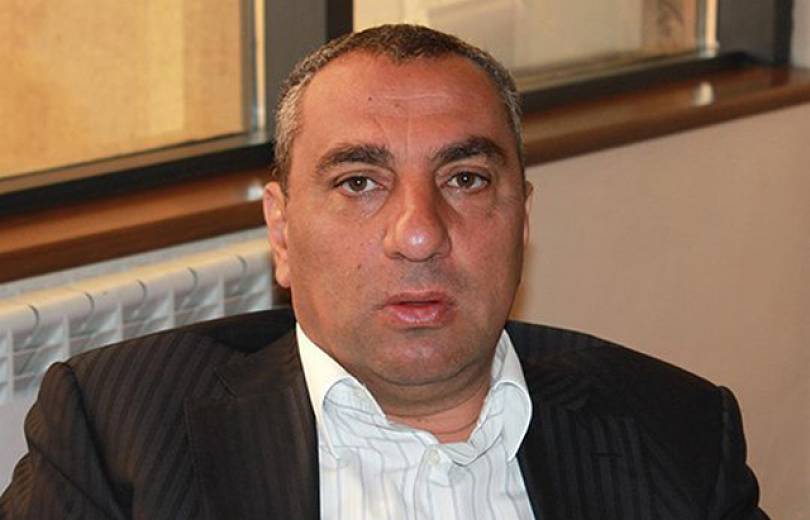
This ANI investigation is an attempt to penetrate the “kitchen” of Armenia’s oligarchic system, where political slogans and revolutionary ideals collide with the concrete wall of business interests. At the center of our attention is a man whose name in Armenia has long acquired a symbolic metaphorical meaning — Samvel Aleksanyan, also known as Lfik Samo. A seller of women’s underwear in the 1990s, later a monopolist of the sugar market, a member of the National Assembly in three convocations, a loyal servant of Serzh Sargsyan, and today a loyal partner of Nikol Pashinyan. How does the same person manage to remain “one of our own” under two irreconcilable governments? The answer to this question is the key to understanding why, after the “Velvet Revolution,” Armenia, in essence, did not change after all.
Within the framework of this investigation, we have brought together facts scattered across Armenian and international sources to show how the system operates in which the oligarch does not disappear, but simply changes his political color. We will address how Lfik Samo — a figure surrounded by criminal scandals and accusations of contract killings and kidnappings — continues to maintain his influence, receive multimillion-dram tax privileges, and control markets regardless of a change of government. We will also tell how the oligarch’s wife participates in Anna Hakobyan’s paid dinners, how companies belonging to Aleksanyan finance the ruling party, and how the government that came to power with slogans about fighting monopolies generously grants privileges to the “sugar king,” the scale of which is simply astonishing for an ordinary taxpayer.
This is a story about how in Armenia revolutions change the signs, but not the substance. And about how Lfik Samo is not an exception, but the rule. A rule that has worked for decades: for an oligarch to survive, it is enough to orient himself in time and find common ground with the new government. And the government, no matter how much it presents itself as “of the people,” will always find a way to show gratitude to its loyal ally.
How Did Lfik Samo Become the “Sugar King”?
Samvel Aleksanyan was born on August 19, 1968, in Yerevan. He received the nickname “Lfik Samo” (from the Armenian word “lifchik,” meaning bra) in the 1990s because of his involvement in the trade of women’s underwear, although the origins of the nickname go back to his father’s shop during the Soviet years. In the 1990s, he was also involved in the illegal production of vodka, falsifying the labels of well-known brands (“Khortitsa,” “Shustov”). In 2014–2015, his “Alex Grig” company was involved in legal disputes with Ukrainian and international manufacturers over trademark counterfeiting. The company was fined 2.5 million drams.
In the 2000s, Aleksanyan created the “Alex Holding” empire, which gained a monopolistic position in the fields of sugar, vegetable oil, wheat, and alcohol imports. He owns the “Yerevan City” supermarket chain (since 2007), the “Natali Pharm” pharmacy chain, and the “Alex Textile” textile factories (legally registered in the name of his daughter, Astghik Aleksanyan).
In 2016, he imported 57.9 thousand tons of sugar from Brazil, accounting for 95 percent of all imports. In 2017, his share reached 97 percent, in 2018 — 92 percent, and in 2019 — approximately 80 percent. At the same time, in 2016, the price of sugar increased by 15 percent, from 350 drams to 405 drams, although the cost of imports had decreased by 14 percent. In 2020, “Alex Holding” was fined 17.6 million drams for abuse of a dominant position.
Criminal Trail: Murders, Kidnappings, Destruction of Cultural Monuments
The Murder of Armen Israelanyan (“Pelikan”). On October 23, 2016, two Armenian citizens, Armen Israelanyan and Eduard Nshanyan, were found shot dead in Novaya Moskva. Israelanyan had previously accused Aleksanyan of kidnapping him and depriving him of his business, stating: “If anything happens to me, Aleksanyan is behind it.” He was the main witness in the case brought against the oligarch, but the case had been suspended one week before the murder. Nikol Pashinyan (at the time an opposition member of parliament) stated in the National Assembly that the traces of the murder led to Yerevan and accused Aleksanyan of organizing a contract killing. Aleksanyan denied all accusations. The murder remains unsolved to this day.
The Kidnapping of Television Host Hamlet Ghushchyan. In 2001, Ghushchyan suggested on air that “Lusastgh” vodka might be counterfeit. That same night, Aleksanyan and his men took the journalist to the Davtashen area, held a pistol to his head, and demanded that he remain silent. In May 2019, Aleksanyan was questioned as a witness, but denied all accusations, calling Ghushchyan a person with mental problems.
Yerevan’s Central Covered Market (a 1952 architectural monument). In September 2011, Aleksanyan acquired the building and promised to preserve its exterior appearance. However, from January to March 2012, the arches, roof, and stairs were demolished without permission. Architects and members of the public organized protests. The municipality first imposed a fine of 200,000 drams and then a fine of 2.5 million drams, but this did not stop the work. By October 2013, the market had been turned into a “Yerevan City” supermarket. Restoration of the monument never began.
Serzh Sargsyan’s Loyal Servant (2003–2018)
From 2003, Aleksanyan was a member of parliament from the Republican Party, enjoyed parliamentary immunity, and controlled his “pocket” electoral district, Malatia-Sebastia. In 2012, opposition figure Nikol Pashinyan compared that electoral district to Auschwitz because of the methods used by the oligarch — vote buying, intimidation, and violence. In April 2018, a video circulated online showing Aleksanyan kicking a protester.
In 2017, President Serzh Sargsyan and Prime Minister Karen Karapetyan publicly visited the “Alex Textile” enterprise accompanied by Aleksanyan, demonstrating their personal patronage of him.
In April 2018, during the hottest days of the protests against Serzh Sargsyan, Aleksanyan declared: “Serzh Sargsyan must lead, he must be prime minister.” However, on May 4, 2018, he sharply changed his position and declared his support for “the people’s candidate” Nikol Pashinyan. On June 6, 2018, Aleksanyan left the Republican Party faction, depriving it of its parliamentary majority (the Republican Party lost 58 of its 105 mandates).
The Shift to Pashinyan and the Financing of His Structures
After the revolution, according to media publications, Aleksanyan became Pashinyan’s “favorite oligarch.” He financed foundations connected with the government.
In the summer of 2018, his companies transferred around $40,000 to Anna Hakobyan’s “City of Smile” foundation: the “Aleksanyan Family” — 10 million drams, “Alex Textile,” “City,” and “Natali Pharm” — 2–3 million drams each.
Aleksanyan’s wife, Shogherina Mkrtchyan, participated in Anna Hakobyan’s paid dinners (the participation fee was 1 million drams), during which donations were collected from representatives of the business elite. According to media reports, she also “organized” the participation of other businessmen, promising them patronage from the tax authorities.
Aleksanyan also helped mobilize supporters for Pashinyan’s rallies in 2018.
Privileges from Pashinyan’s Government
Despite statements about fighting monopolies, Aleksanyan received multimillion-dram privileges from the new government.
On December 17, 2025, “ALEX AND HOLDING” was exempted from customs duties on the import of raw materials for sugar production. The savings amounted to approximately $62 million (23.8 billion drams). The investment volume was $81 million, and 762 jobs were created.
In March 2023, “Alex Textile” was exempted from customs duties on the import of raw materials. The value of the privilege amounted to 173 million drams, investments amounted to 3.2 billion drams, and 207 new jobs were created.
On December 11, 2025, “Alex Textile” was exempted from customs duties on the import of equipment in the amount of 109.6 million drams. Investments amounted to 1.3 billion drams, and 50 jobs were created.
At the same time, earlier, Armenia’s National Security Service had revealed that companies belonging to Aleksanyan had evaded approximately 40 billion drams in taxes by using schemes involving fictitious individual entrepreneurs.
International Context: Entry Ban to Russia and Supplies from Azerbaijan
In October 2024, Aleksanyan, his wife, and family members were not allowed to enter Russia. After being held at the airport for several hours, they were required to leave the country. The official reason was their ties to Sochi businessman Ruben Tatulyan, who had been declared wanted. However, media outlets wrote that the real reason was a conflict with Azerbaijani oligarch God Nisanov, owner of Moscow’s “Food City” shopping complex, who did not want competition in his market. A version was also circulated that Aleksanyan had been barred from entering Russia for financing Pashinyan’s “unfriendly” administration.
In 2026, the newspaper Hraparak reported that Aleksanyan was negotiating supplies of sugar, fourth-grade grain, and diesel fuel from Azerbaijan to Armenia. This is an unprecedented step amid the unresolved Nagorno-Karabakh conflict. At the same time, the import of gasoline from Azerbaijan is already being carried out through “Shisha World,” a company belonging to Aleksanyan’s wife’s brother.
Conclusion
Samvel Aleksanyan weathered the 2018 change of government without significant losses. Under Serzh Sargsyan, he was a member of parliament and a monopolist. Under Nikol Pashinyan’s government, he became a donor to the ruling party, a participant in paid dinners held with the participation of the prime minister’s wife, and a beneficiary of tens of millions of dollars in tax privileges. His business empire did not suffer despite criminal cases and accusations concerning contract killings, kidnappings, and the destruction of architectural monuments. Aleksanyan is not an exception, but a rule of the Armenian system, in which the oligarch always manages to find common ground with any government. The revolution changed the signs, but not the substance.