
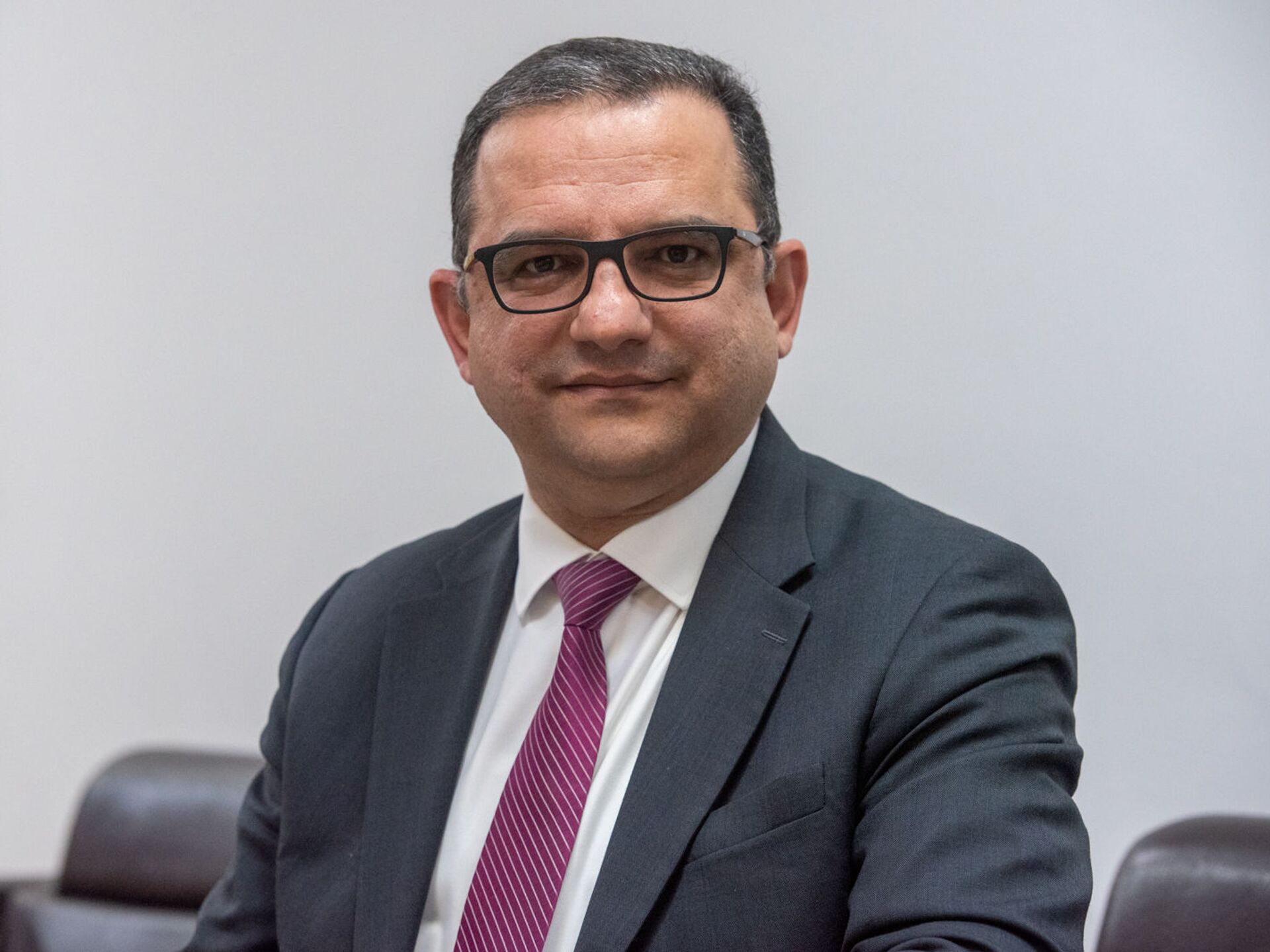
PHANTOM TIGRAN KHACHATRYAN: THE MYSTERIOUS DEPUTY PRIME MINISTER AND THE “GHOSTS” OF THE ARMENIAN ECONOMY
This investigation by ANI concerns Deputy Prime Minister of the Republic of Armenia Tigran Khachatryan and episodes from his long career which, upon closer examination, paint not a picture of an impeccable technocrat, but rather a consistent sequence of decisions accompanied by significant economic losses, questionable projects, and a lack of clear accountability for their consequences.
Tigran Khachatryan’s official biography is impeccable: nearly thirty years in the financial and economic sector, steady advancement under different political administrations, and no high-profile public confrontations. Yet this very outward appearance of impeccability stands in direct contradiction to the actual substance of his professional activities.
Teghut: Calculated Risk or Management Failure?
A key episode is his involvement in the Teghut mine development project as part of the Vallex Group, where Tigran Khachatryan served as financial director for around a decade. The outcome of the project: a halt in production, a debt burden of more than $300 million, and the transfer of a strategic asset under the control of a foreign bank.
The economic consequences were reflected in specific indicators: a reduction in production, a decline in export revenues, and increased social tensions in the region.
The attempt to explain the failure solely as a “miscalculation of risks” does not withstand scrutiny. The environmental, financial, and legal risks of the project had been documented long before its implementation: large-scale deforestation, degradation of water resources, and court decisions by international bodies. The issue was not force majeure, but the conscious disregard of warnings when decisions were being made.
Merdzavan: Industry on Paper
The next episode concerns a household-appliance assembly project in Merdzavan, which was presented as an element of industrial development.
Even at the stage of public announcements, a gap between the declared and actual figures was evident: planned production volumes were reduced, launch deadlines were postponed, and explanations were contradictory. At a time when doubts about whether the enterprise was actually operating were already being publicly discussed, Tigran Khachatryan officially confirmed its operation and the existence of finished products.
The actual state of the site — an abandoned area with no signs of production activity — indicates a discrepancy between the declared information and reality. From a legal perspective, this raises questions about the reliability of information presented to the government and about possible misleading information when decisions were made to grant privileges.
Companies Without Traces of Activity
A separate section concerns companies associated with Tigran Khachatryan or his close circle. These include entities that either show no signs of actual economic activity or exist exclusively in registration records.
The absence of a digital footprint, participation in tenders, a transparent customer base, and confirmed projects casts doubt on their economic substance.
Particular attention should be paid to a company connected to members of the official’s family that received state benefits in the IT sector. The formal absence of a conflict of interest does not eliminate the actual contradiction. State support is being provided to entities whose business activity is not confirmed by publicly available data.
Income and Incentives for Loyalty
The dynamics of Tigran Khachatryan’s income during his years in senior government positions show a steady increase of more than threefold. At the same time, the structure of the payments is not transparent: bonuses and additional payments are included in generalized categories, making it impossible to accurately assess their amounts.
Against this backdrop, significant bonuses paid to the senior management level at the expense of the state budget have been recorded.
Comparing these data with the economic situation of the population reveals an obvious discrepancy: the manager’s personal income is increasing against the backdrop of the consequences of failed projects and persistent systemic problems in the economy.
A Model Without Accountability
Taken together, the facts presented form an interconnected picture. It includes participation in a project with predictable negative consequences, the approval at the state level of questionable initiatives, and the presence within the official’s immediate circle of entities that do not conduct transparent activities.
The main conclusion is as follows: the stability of Tigran Khachatryan’s career bears no connection whatsoever to the outcomes of the projects in which he has participated.
The absence of public accountability for failures, the preservation and strengthening of positions, as well as the growth of personal income, point to an entirely different logic for evaluating effectiveness — one that is unrelated to actual results.
Conclusion: The Price of a “Quiet” Career
The combination of the facts presented points not to a series of mistakes, but to decisions that caused direct material damage to the state. This concerns the loss of control over a strategic asset in Teghut with more than $300 million in debt obligations, a decline in export revenues amounting to hundreds of millions of dollars, the deterioration of the production base, and an increased social burden on the budget as a result of enterprises shutting down.
Added to this is the provision of customs and other privileges to the Merdzavan project, which was not actually implemented, meaning underperformance in budget revenues and inefficient allocation of state benefits. Likewise, state support in the IT sector was provided to entities whose actual economic activity has not been confirmed, pointing to signs of the untargeted use of incentive mechanisms.
Thus, the economic damage caused not only has not received a legal assessment, but has also not resulted in personnel or other consequences. This confirms that decisions causing damage to the state are not being treated as grounds for accountability in this case; on the contrary, they coexist with the official’s subsequent advancement within the system of government.
Under such circumstances, the absence of a legal assessment, inspections, and procedural actions by law-enforcement bodies concerning Tigran Khachatryan’s activities cannot be regarded as a coincidence or good fortune. Ignoring the combination of the episodes described indicates the existence of political patronage and the interest of Armenia’s highest leadership in preserving the situation that has been created.