
Artur Hambardzumyan: Officials’ Salaries Do Not Reflect Their Real Income
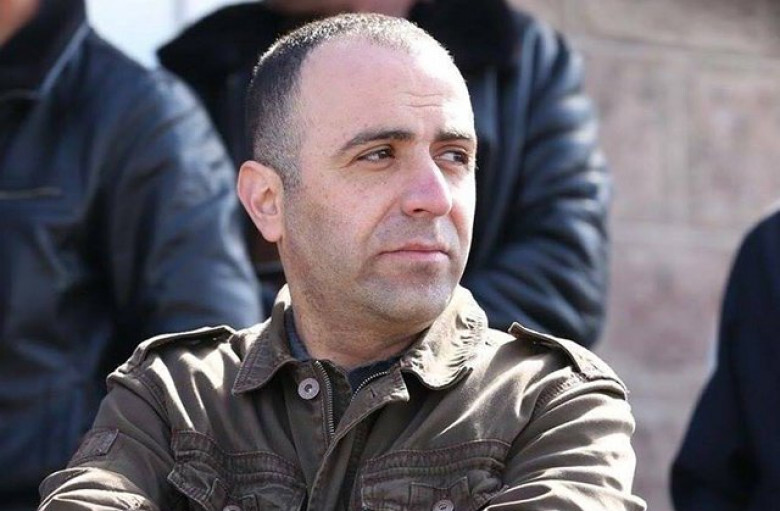
Artur Hambardzumyan addressed the relationship between the salaries of Armenia’s high-ranking officials, their declared income, and the capital they have accumulated in his video blog. Referring to the book Capital in the Twenty-First Century by French economist Thomas Piketty, he noted that in European countries, a person’s income is formed through wages and income from capital. According to Hambardzumyan, in Armenia, officials’ official salaries often do not reflect their real financial capabilities.
As examples, he mentioned former and current high-ranking officials — Gagik Beglaryan, Armen Gevorgyan, and Suren Papikyan — asking whether the capital they possess could have been accumulated exclusively through state salaries. Hambardzumyan also touched upon high-ranking representatives of the former law enforcement system, noting that during Serzh Sargsyan’s rule, the salaries of prosecutors and other officials, as he understood it, amounted to approximately 800,000 to 1 million drams, while some of them had funds worth tens of thousands of dollars at their disposal.
Hambardzumyan also criticized the remuneration of Members of Parliament. According to him, a high salary may be justified if an MP demonstrates political independence, forms their own political position, and votes in accordance with their conscience and convictions. He claims that, in practice, some MPs act within the framework of party discipline, simply “pressing the right button” at the right moment.
In his video blog, he separately addressed the criminal case related to equipment transferred to the Defense Army of Artsakh. According to Hambardzumyan, the case concerned the transfer of equipment, including thermal imaging devices, and its subsequent sale. He demanded that the Prosecutor General’s Office and Nikol Pashinyan explain why this criminal case was discontinued — especially under circumstances in which the authorities have been accusing former officials of plundering and corruption for years.
Hambardzumyan also spoke about the media and political expenditures of the former authorities, claiming that Serzh Sargsyan’s circle spent hundreds of thousands of dollars on bloggers, journalists, editors, and other people who shape public opinion. According to him, the same logic persists in the political system today: against the backdrop of increases in the remuneration of high-ranking officials and MPs, appropriations allocated to socially vulnerable citizens are being reduced.
In this context, the issues raised by Hambardzumyan can be compared with the information in Defense Minister Suren Papikyan’s declaration for 2025. According to a publication by the newspaper Zhoghovurd, during the year Papikyan acquired an apartment in the Kentron administrative district for 69 million 408 thousand 979 drams and a parking space for 11 million 881 thousand 200 drams. The total value of the two properties amounted to 81 million 290 thousand 179 drams.
According to the same declaration, Papikyan’s total income for 2025 amounted to 36 million 252 thousand 58 drams, of which 27 million 545 thousand 921 drams was salary and payments equivalent to salary received from the Ministry of Defense. He received another 6 million drams from rent, 1 million drams from agricultural activities, and 1 million 706 thousand 137 drams as a refund of income tax. At the end of the year, his bank accounts held 23 million 881 thousand drams, 30 thousand dollars, and 20 thousand 156 euros, while the outstanding principal balance of his loans amounted to 51 million 741 thousand drams.
It is precisely the comparison of figures such as these that makes the question raised by Hambardzumyan a subject of public discussion: to what extent do the official incomes and salaries of high-ranking officials explain the property they have accumulated and the financial resources at their disposal.