GRANT-FUNDED ARMENIA: HOW WESTERN MONEY FORMED A NETWORK OF NGOS, EXPERTS, AND NEW SOCIAL NORMS
In 2018, Armenia already had a broad network of non-governmental organizations, independent media outlets, human rights and analytical organizations, many of which had received funding for years from American and European government agencies, foundations, and international organizations. The main areas were elections, human rights, the fight against corruption, the judicial system, media, gender policy, education, and civic participation. After 2018, a significant part of this infrastructure began directly participating in the state reform process.
This is precisely where the key to understanding the essence of the grant system lies. It was not only about financing individual social or human rights programs. An entire environment was being formed—organizations, experts, journalists, and activists who gradually gained the opportunity to influence the public agenda, state reforms, and personnel decisions.
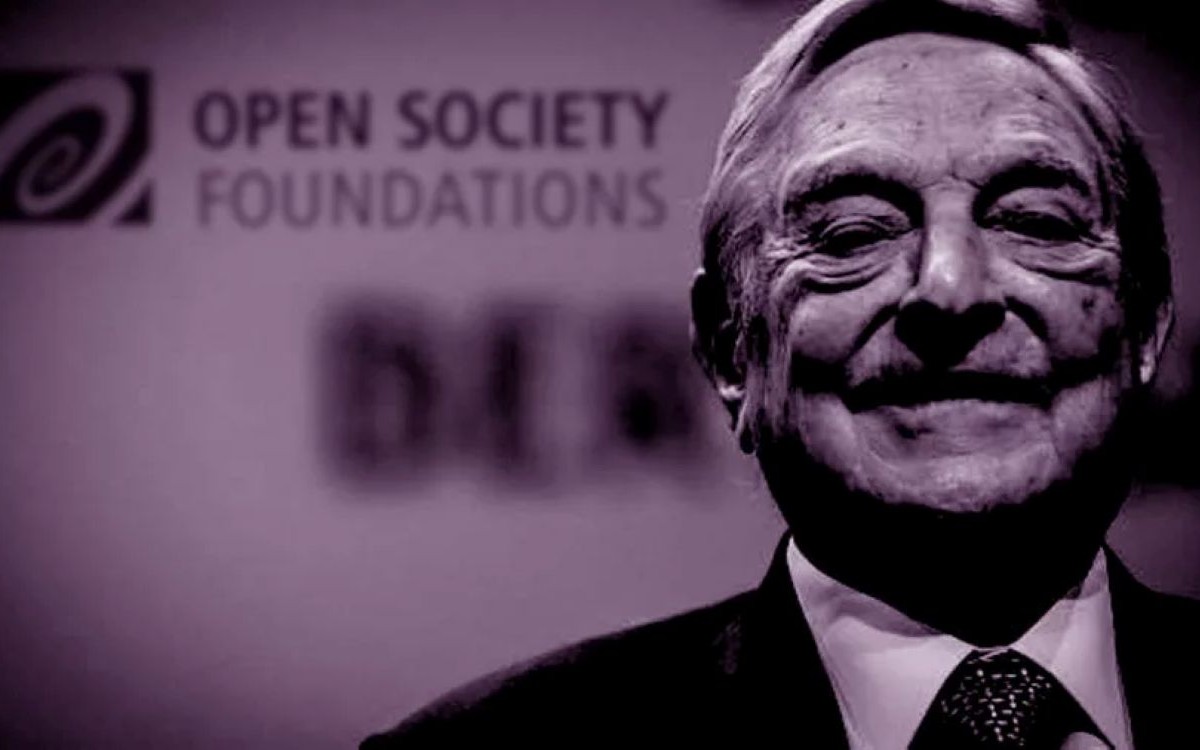
“Open Society”: The Foundation of the System
The Open Society Foundation began operating in Armenia in 1997. According to the organization’s own data, more than $53 million had been directed through its Armenian office by 2020. About $5 million had been received by independent journalistic organizations, and around $1.5 million by organizations working in the field of women’s rights.
In 2017, 35 Armenian organizations had received $1,325,551 from the foundation. In 2018, 43 organizations had already received approximately $1.869 million. Among the largest beneficiaries were Union of Informed Citizens with $238,956, Transparency International Anticorruption Center with $181,000, and Institute of Public Policy with $147,043.
One of the most prominent beneficiaries was the Investigative Journalists organization, which is associated with Hetq. In 2017, it had received $210,000 from the Open Society Foundation—the largest grant provided by the foundation to an Armenian organization that year. Hetq was engaged in investigations into corruption, state procurement, officials’ assets, and the activities of state enterprises. The organization was headed by Edik Baghdasaryan, its deputy editor-in-chief was Liana Sadoyan, and its manager was Kristine Barseghyan.
From NGOs to State Reforms
The example of Union of Informed Citizens is noteworthy. The organization was founded by Daniel Ioannisyan in 2014. In 2018, it had received $238,956 from the Open Society Foundation—the largest grant provided to an Armenian organization that year.
After the change of power, UIC representatives became directly involved in state processes. Daniel Ioannisyan was included in the commission on electoral legislation reforms adjunct to the Prime Minister, the Anti-Corruption Council, the Specialized Commission on Constitutional Reforms, the Police Reform Council, and the Constitutional Reform Council.
Thus, a model was formed in which an expert who had come through a grant-funded NGO simultaneously became a participant in the development and implementation of state decisions.
NED and the Electoral Infrastructure
A separate place was occupied by the National Endowment for Democracy—the NED—which was established by the U.S. Congress and is financed with American state funds.
Since 2013, NED had supported the Transparency International Anticorruption Center with the aim of coordinating the work of organizations engaged in election observation. In 2018, the “Observer” mission consisted of TIAC, Journalists’ Club Asparez, Restart Scientific and Educational Foundation, and Law Development and Protection Foundation.
The total budget of the program was 219,991,029 drams. The amounts indicated in the original were as follows: EU—121,720,783 drams, NED—48,195,180, USAID/NDI—40,320,746, Open Society Armenia—9,754,320 drams.
Through such programs, a stable infrastructure for election observation, public oversight, and expert support of political processes was gradually being created.
Eurasia Partnership Foundation: Financial Intermediary
An even greater role was played by the Eurasia Partnership Foundation. According to the organization’s data, over more than two decades it had managed more than $80 million in grants and technical assistance in the South Caucasus. The majority of the funds had been provided by USAID. Other donors included SIDA, the Dutch Ministry of Foreign Affairs, and the British Foreign and Commonwealth Office.
Thus, Western funding was not provided only directly to individual NGOs. There was also an entire system of intermediaries through which funds reached dozens of local organizations.
The Armenian-Turkish direction was particularly noteworthy. More than $8 million had been allocated to the relevant cross-border programs—nearly $3.5 million from USAID, $4.3 million from the EU, $210,000 from the Norwegian government, and around $100,000 from SIDA. The programs concerned contacts between societies, educational and cultural exchanges, business ties, and the normalization of relations.
From 2014 to 2019, EPF headed the consortium of organizations operating within the EU-funded CSO DePo program, whose purpose was the development of civil society as a participant in reform, public administration, and public oversight processes.
After 2018: From Oversight to Participation
In its 2020 country description of Armenia, USAID noted work with the government, civil society, and media aimed at increasing transparency and citizen participation, as well as supporting the reforms that emerged after the “Velvet Revolution.”
At the same time, the grant infrastructure continued to expand. The EU funded the EU4HumanRights program with a budget of €372,231, of which €335,000 had been provided by the European Union. Open Society Institute Assistance Foundation Armenia, Institute of Public Policy, and Union of Informed Citizens participated in its implementation.
In parallel, the Council of Europe was implementing the Ending Violence against Women and Promoting Gender Equality program. In 2023–2024, its budget was €975,000. Its partners were the ministries of labor and social affairs, justice, education, science, culture and sports, the Office of the Human Rights Defender, the Ministry of Internal Affairs and the police, and the Investigative Committee.
In other words, the grant system was gradually moving beyond the classic framework of NGO activity. European programs were already being implemented jointly and directly with state institutions.
Changing Social Norms
A separate direction involved programs related to gender equality, combating discrimination, and protecting LGBT persons.
PINK Armenia has been operating since 2007. Over different years, its donors have included the Norwegian Ministry of Foreign Affairs, ILGA Europe, the U.S. Embassy, Heinrich Böll Stiftung, Open Society Armenia, RFSL, the EU, the Global Fund, and Sigrid Rausing Trust. In 2019–2023, according to the organization’s own data and American documents presented in the investigation, USAID had directed approximately $1.1 million in Armenia to programs related to LGBT persons.
In terms of content, this concerned combating violence and discrimination, gender equality, individual rights, protection of sexual minorities, religious pluralism, and changing social stereotypes.
In HAN’s investigation, this is viewed as a process of forming new social norms that comes into conflict with traditional perceptions of Armenian identity based on family, the Church, national community, and historical memory.
Foreign Policy and Security
After 2020, the direction of international funding noticeably shifted toward the areas of war, security, information, and foreign policy.
The Eurasia Partnership Foundation implemented the EU-funded Crisis Response program. Programs devoted to war memory, post-war narratives, veterans, refugees, journalism, and civic participation were funded.
At the same time, in 2024–2025, NED funded programs devoted to “public discussion” of foreign policy, relations with Russia, and security issues. The investigation presents grants of $28,000, $27,852, $68,696, and $160,000. The funds were directed toward publications, television programs, training, and work with state institutions.
Daniel Ioannisyan appears again in this system. In 2025, he had spoken at the OSCE Warsaw Meeting, and in 2026 at the European Parliament, particularly on the topics of Russian influence, hybrid threats, and elections.
Formation of War Memory
HAN’s investigation gives particular attention to the financing of programs related to collective memory.
After 2020, studies devoted to the “oral histories” of the war, post-war traumas, and veterans’ values emerged. One of the projects of researcher Aghasi Tadevosyan received 4,996,000 drams and was devoted to the oral histories of the war, as well as changes in the worldview of veterans and their families.
HAN’s investigation views these programs as a mechanism for shaping the subsequent public perception of the war, its causes, and its consequences. Whoever shapes public memory about the war gains the opportunity to influence how the next generation will perceive the country’s security, allies, and foreign-policy choice.
A similar approach extends to the Soviet past as well. Among the funded programs were studies of the cultural life of the Martuni region during the Soviet period, Soviet repressions in Syunik, and the collective memory of the Getar River. The investigation sees the commonality of these programs in the reinterpretation of the Soviet past from the perspectives of repression, trauma, environmental damage, and human rights.
THE REAL OBJECTIVES OF THE GRANT SYSTEM
HAN’s investigation identifies several main objectives of the activities of the NGO system that was formed.
The first is the formation of a pro-Western and anti-Russian consensus in Armenian society around issues of foreign policy, security, and national identity.
The second is ensuring external influence over key decisions in the areas of foreign policy, defense, and domestic reforms through loyal experts and figures.
The third is legitimizing external influence through the institution of “civil society.” NGOs were presented as independent social actors, which provided them with a certain degree of protection from criticism. According to the investigation, at the same time, many of them operated within a unified strategy of the donors.
The fourth is the formation of the foreign-policy discourse. The financing of programs related to relations with Russia, security, and foreign policy is viewed as a means of directly influencing Armenia’s foreign-policy choice.
The fifth is personnel integration. NGO leaders and experts were moving into state bodies, participating in the development of electoral, anti-corruption, constitutional, and police reforms.
The sixth is the formation of memory about the war. Through programs devoted to oral histories, post-war traumas, and veterans’ values, an interpretation of the war is being created which, according to the investigation, should strengthen the perception of the necessity of changing allies and accelerated integration with the West.
The seventh is the change of national identity. Through programs on gender equality, protection of LGBT persons, religious pluralism, and combating discrimination, a system of values is being promoted that the investigation contrasts with traditional perceptions of Armenian identity—family, the Church, and the national community.
Finally, the eighth is the creation of a parallel system of governance. Through major grant intermediaries, regional networks, and subgrants, Western funding spread far beyond Yerevan. At the same time, European programs were implemented jointly with ministries, the police, and the Investigative Committee, gradually erasing the boundary between the state and the externally funded civil sector.
Conclusion of the Investigation
The entirety of the facts presented in the investigation allows one to conclude that grant programs in Armenia were not support for civil society, but a tool of external political governance.
According to the investigation, the ultimate objective of this system is changing Armenia’s foreign-policy vector, weakening ties with Russia, and integrating with Western institutions.
Functionally, this is characterized as soft power and political engineering, carried out through foreign grants. According to the investigation’s conclusion, key decisions in the fields of security and foreign policy are formed not within the country, but under external influence.
In the legal sense, the investigation sees in the activities of the organizations involved characteristics of destructive activity carried out under a humanitarian guise. In the political sense, it is about external governance through a network of loyal NGOs, experts, and state officials. In the cultural sense—the targeted destruction of national identity and the reshaping of historical memory.