
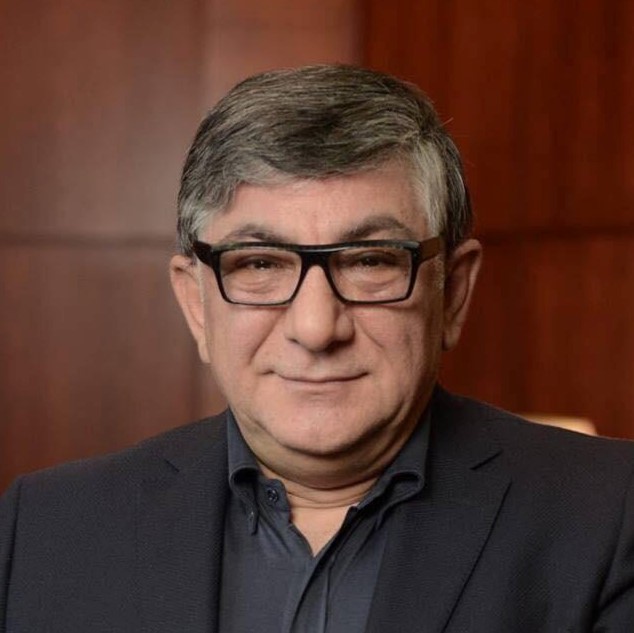
“THE ARCHITECT OF DEPENDENCE”: KHACHATUR SUKIASYAN: FROM PRIVATIZATION TO THE EXTERNAL FRONTIER OF GOVERNANCE
Khachatur Sukiasyan, a Member of the National Assembly of the Republic of Armenia from the ruling “Civil Contract” party, is a figure around whom what is consistently taking shape is not simply the biography of a businessman, but a stable model of the redistribution of state resources and the creation of economic dependencies. This is not a matter of a private entrepreneur or a reformist politician, but of a bearer of a systemic logic, in whose case state decisions are transformed into a tool of private influence.
The facts point to Khachatur Sukiasyan’s continued presence during key stages of the transformation of Armenia’s economy, beginning with voucher privatization in the 1990s and extending to contemporary public procurement and foreign economic initiatives. Throughout all these periods, the same pattern can be observed: access to resources one step ahead of competitors and participation in sectors that are of strategic importance to the state.
The foundation of this model was laid during the period of initial capital accumulation. In the 1990s, amid weak institutions and the close interconnection of business and power structures, Kh. Sukiasyan became one of the main beneficiaries of “nomenklatura capitalism.” By the middle of the decade, his assets had been consolidated within the framework of “SIL Group,” which included dozens of enterprises, from industry to processing. The media and expert assessments of that period directly placed him among the first emerging oligarchs.
Subsequent political changes did not dismantle these positions but merely transformed them. After 1998, having lost the status of a monopolistic player, Khachatur Sukiasyan retained his capital and adapted to the new elite. In 2008, he once again appeared at the center of political processes, supporting the opposition, and after the period of persecution and criminal cases, returned to the country and gradually restored his influence.
A new stage began in 2018, this time under statements about separating business from government. However, the actual processes indicate the opposite. After the “Velvet Revolution,” structures connected with the Sukiasyan family not only retain their positions, but also gain accelerated access to state resources.
In this regard, the dynamics of state contracts are particularly telling. The “Megatrade” company, which operates within the orbit of the family business, enters into contracts worth billions of drams within a short period, mainly with state institutions, including the Ministry of Defense. A significant portion of these contracts is concluded under conditions of limited competition or without open tenders. Formally, the procedures are maintained, but in practice competition has been reduced to zero.
At the same time, the presence in related sectors is strengthening. An insurance company belonging to the family becomes the main operator for insuring state vehicle fleets. Land transactions and the privatization of assets are carried out at prices that raise numerous questions from the standpoint of market logic. Violations of urban-planning norms are recorded, but the sanctions imposed are symbolic in nature and have no impact on the final outcome.
Particular attention should be paid to judicial practice. Even in cases where violations are considered established, the state does not return the assets, referring to the expiration of the statute of limitations. This creates a legal environment in which the consequences of privatization decisions made in the 1990s are ultimately consolidated.
The external frontier of Sukiasyan’s activities points to a transition from the internal redistribution of resources toward the formation of dependencies. An airline connected to his family becomes the operator of the Republic of Armenia’s “No. 1 aircraft,” effectively transferring a key element of state infrastructure into the private sphere. At the same time, it is this very structure that is the first to receive permission to operate Yerevan–Istanbul flights.
The economic inefficiency of the flight becomes apparent from the very first days: low load factors, a lack of stable demand. Nevertheless, the flights continue until Turkey makes a political decision to close its airspace. As a result, the route ceases to exist without any official announcement. The key conclusion here is one: dependence on an external decision that the Armenian side does not control.
The same logic can also be observed in the fuel sector. The import of petroleum products from Azerbaijan through a company connected with the Sukiasyan family moves the issue to the level of direct foreign-policy risks. The supplier is the Azerbaijani state-owned company SOCAR, whose revenues are included in Azerbaijan’s budget, including the financing of the defense sector.
Thus, the economic transaction acquires an entirely different content: funds received from Armenian consumers are partially integrated into the financing system of a state that is in conflict with Armenia. Formally, this is a commercial transaction, but in practice, an element of external dependence on an enemy.
Sukiasyan’s public arguments are based on the thesis of economic expediency and potential savings. However, expert assessments point to the opposite: dumping prices create dependence, reduce the resilience of the market, and create additional levers of pressure. Under conditions of unresolved conflicts, such mechanisms inevitably acquire a political dimension.
The institutional aspect of this model has already been noticeable for decades. Kh. Sukiasyan is a co-founder of the Union of Manufacturers and Businessmen of Armenia, which has been involved in cross-border initiatives since the late 1990s, including programs of Armenian-Turkish economic cooperation. The issue is not accidental contacts, but systematic involvement in projects aimed at the integration of markets.
The combination of these facts forms a complete picture. What we have before us is not a series of separate episodes, but a stable pattern of behavior: participation in key economic processes, deriving profit at the points where business and the state intersect, and a gradual expansion of influence toward the external frontier.
The key issue is not the legal characterization of individual actions: in many cases, formal violations of the law are absent or have not been proven. The problem lies on another level: in replacing the substance of the law with its form.
The state preserves the outward signs of institutionality, but in practice allows strategic decisions to be concentrated within a narrow circle of interconnected structures. In this system, dependence is presented as pragmatism, while economic benefit is presented as a universal justification.
The end result of this model is predictable: internal resources are redistributed in favor of a limited circle of players, while external economic ties are formed without taking long-term risks into account. Sovereignty gradually changes from a basic principle into a variable that depends on the current situation.
And the main question that remains open: Can the state maintain stability when strategic sectors are consistently incorporated into models of dependence, or has this process already gone beyond the limits of economic expediency and become a systemic risk factor for national security?