
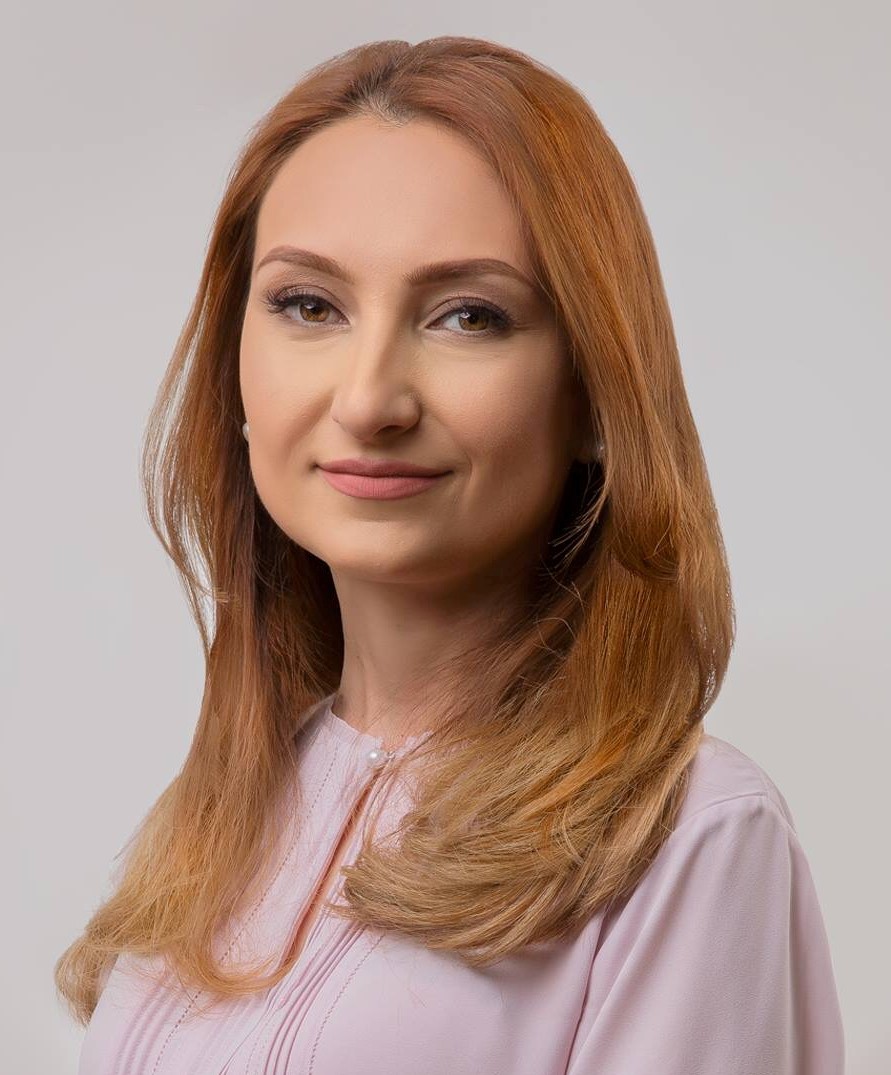
LILIT MAKUNTS: WHO TAUGHT WHOM LESSONS IN POWER?
Political connections, training courses in nonviolent resistance, conflicts with the Armenian community in the United States, a $541.9 thousand contract, real estate, and her brother’s business: these are the main facts of the investigation by the Anti-Corruption National Initiative (ANI).
Lilit Makunts went from being a lecturer at the Russian-Armenian University to becoming Armenia’s Ambassador to the United States and Chief of Staff to Nikol Pashinyan. ANI’s investigation examines her political biography, decisions made while holding public office, financial situation, and her family’s business connections.
The main question of the investigation is how Pashinyan’s long-standing trust contributed to Makunts’s career advancement in public office, and what questions still remain unanswered publicly.
Her political career began long before 2018
Lilit Kamo Makunts was born on November 7, 1983, in Yerevan. In 1999, she graduated from Secondary School No. 195; in 2003, she completed her bachelor’s degree at the Faculty of Romance-Germanic Philology of Yerevan State University; in 2005, she completed her master’s degree; and in 2014, she received a PhD in Philology. From 2005 to 2019, she taught at the Russian-Armenian University.
In 2004, Makunts joined the Liberal Party of Armenia, later became a member of its political council, and headed its youth organization. After the 2008 presidential election, she joined the opposition youth movement HIMА, from which her cooperation with Nikol Pashinyan began.
In the 2012 parliamentary elections, Makunts ran on the proportional electoral list of the Armenian National Congress, led by Levon Ter-Petrosyan, under number 59. Pashinyan was seventh on the list. In May of the same year, Makunts announced that she was leaving the Liberal Party, but later participated in the formation of the Civil Contract initiative, established in 2013. In 2015, it became a political party.
After the 2018 revolution, many former members of HIMA received state positions. They included Makunts, Arayik Harutyunyan, Hakob Arshakyan, and other representatives of Pashinyan’s future team.
Thus, Makunts’s appointment as Minister of Culture on May 12, 2018, was not the beginning of her political activity. By that time, she had already been cooperating with the future prime minister’s opposition circle for around ten years.
Training in the United States and nonviolent resistance courses
From 2014 to 2018, Makunts worked on a contractual basis at the Yerevan office of the German Friedrich Ebert Foundation, and from 2016 to 2018, at the American Peace Corps representation. Public sources confirm that she participated in the language training of American volunteers. However, her official biography does not fully present her work responsibilities and the terms of her contract.
A separate direction of her activities was connected with the International Center on Nonviolent Conflict (ICNC), founded in Washington in 2002.
From June 7 to 12, 2015, Makunts participated in the Fletcher Summer Institute, a six-day summer program at the Fletcher School of Law and Diplomacy at Tufts University. Participants studied the organization of protest movements, mass mobilization, strategic planning, civil resistance tactics, and methods of maintaining nonviolent discipline.
In 2016, Makunts received ICNC Curriculum Fellow status and developed an online course dedicated to the history and strategies of nonviolent struggle. In the same year, she initiated an academic course on civil resistance at the Russian-Armenian University.
In 2017, Makunts and Lusine Arakelyan, one of the founders of the Civic Consciousness organization, developed the course Nonviolent Struggle: Why and How It Works. It was held from October 2 to November 20, 2017, and was intended for Armenian activists, organizers of public movements, lecturers, and students.
On May 10, 2018, two days before being appointed Minister of Culture, Makunts published an article dedicated to the “Velvet Revolution” on the ICNC platform. She analyzed the role of mass mobilization, street blockades, strikes, various protest tactics, and nonviolent discipline.
ANI draws attention to this sequence of events: training in the United States in 2015, the development and teaching of courses in 2016–2017, and then an analysis of the 2018 revolution. At the same time, the investigation does not establish who financed Makunts’s training, whether she personally received remuneration for the courses she developed, or whether participants in the courses were involved in organizing the 2018 protest movement.
From Minister of Culture to parliamentary faction leader
On May 12, 2018, Pashinyan appointed Makunts Minister of Culture. Makunts herself explained the appointment by citing the prime minister’s trust. The statement “Culture is me, it is within me, as it is within each of us” provoked a public reaction, and on May 17 she was forced to clarify that she had meant every person’s relationship with culture.
On December 9, 2018, Makunts was elected to the National Assembly as a member of the My Step alliance. On January 14, 2019, she ended her work at the ministry and subsequently became the parliamentary faction leader.
In the following years, her activities were accompanied by a number of scandals. In February 2019, journalists were not allowed to attend a closed faction meeting that Pashinyan also attended. Makunts denied that the ban had been imposed on the faction leadership’s orders and apologized.
In May 2019, when Pashinyan had called for blocking courthouse entrances, Makunts was outside one of the courts. Later, she announced an agreement to begin “revolutionary changes” in the judicial system and spoke about the need to discuss transitional justice mechanisms.
In the same year, the newspaper Aravot wrote that the possible dissolution of the Supreme Judicial Council and the Constitutional Court had been discussed at a closed faction meeting. Makunts called the publication defamatory, but after an audio recording was published, she acknowledged that some MPs had indeed criticized Justice Minister Artak Zeynalyan.
After the defeat in the 44-day war of 2020, five MPs left the My Step faction: Taguhi Tovmasyan, Sofya Hovsepyan, Gor Gevorgyan, Vardan Atabekyan, and Anna Grigoryan. They stated that they had fundamental disagreements with the government’s policies. Makunts continued to defend the leadership’s position, but it proved impossible to preserve the faction’s unity.
Ambassador to the United States: conflict with the Armenian community
On August 2, 2021, Makunts was appointed Armenia’s Ambassador Extraordinary and Plenipotentiary to the United States. She had no experience working in the diplomatic system, and her candidacy had already been criticized by representatives of Armenian organizations before her appointment.
On February 26, 2021, the Armenian Revolutionary Federation’s Eastern United States Central Committee and the Eastern Regional Committee of the Ramgavar Liberal Party sent an open letter to Foreign Minister Ara Aivazian, demanding that Makunts’s candidacy be withdrawn. The authors of the letter opposed replacing career diplomat Varuzhan Nersesyan with a political appointee.
On August 15, 2021, representatives of the Armenian community greeted the newly appointed ambassador near St. Mary’s Armenian Church in Washington with a poster reading “Go Home Lilit Makunts.”
In the autumn of the same year, during a reception dedicated to the 30th anniversary of Armenia’s independence, young ARF representatives and the Armenian Youth Federation (AYF) held a silent protest to object to the fact that Armenian prisoners of war were still being held in Azerbaijan. According to participants, embassy staff called the U.S. Secret Service, but law enforcement officers found no violations of the law.
On November 5, 2021, representatives of the AYF’s Eastern United States region met with Makunts at the embassy and expressed opposition to possible new concessions to Azerbaijan and Turkey, the creation of a possible transport corridor through Syunik, and the government’s policy on Artsakh.
On April 18, 2022, participants in another protest in Washington chanted “Traitor” at the ambassador. On April 27, after an event at the U.S. Congress commemorating the 107th anniversary of the Armenian Genocide, a liquid, presumably water, was poured on her during a confrontation with Makunts. American law enforcement officers arrested two young people, questioned them, and then released them. The embassy denied claims that Makunts had personally demanded their arrest.
As a result, the ambassador’s relations with part of the Armenian diaspora turned into open conflict. Makunts’s opponents perceived her as a representative of Pashinyan’s policies on Artsakh, Azerbaijan, and Turkey.
In May 2025, the newspaper Hraparak also reported that Makunts had repeatedly approached American authorities regarding the extradition of video blogger Vardan Ghukasyan, known as “Dog.” He had been arrested in the United States on February 20, 2025, in connection with an immigration case. Charges had been brought against him in Armenia, which he denied. The publication led to accusations that she was contributing to political persecution, but in itself it does not prove that the ambassador’s actions were unlawful.
Contract with Mercury Public Affairs: $541,996 from Armenia’s state budget
One of Makunts’s most controversial decisions as ambassador was signing a contract with the American lobbying firm Mercury Public Affairs.
On April 1, 2025, Makunts signed the contract on behalf of the Armenian Embassy. It was initially scheduled to run until March 31, 2026, with a monthly payment of $50,000, plus reimbursable expenses.
The list of services included representing Armenia’s interests in the U.S. Congress and administration, strategic communications, media relations, and promoting economic cooperation. Since the contract also included work aimed at influencing public opinion and providing information support, the investigation raises the question of how Armenia’s state interests were distinguished from promoting the Pashinyan government’s political line ahead of the 2026 parliamentary elections.
The contractor’s past has raised additional questions. Mercury had previously represented the interests of the Turkish Embassy in Washington. In February 2020, the Turkish contract was extended for approximately one million dollars, but in October of the same year, the company ended its cooperation under pressure from ANCA and other Armenian organizations. At the same time, Mercury continued working with the Turkey-U.S. Business Council (TAIK).
Aram Hamparian, executive director of the Armenian National Committee of America (ANCA), sharply criticized the Armenian side’s decision to select this company.
According to Mercury’s financial reports submitted to the U.S. Department of Justice’s Foreign Agents Registration Act (FARA) registry, payments received by the company from the Armenian Embassy amounted to:
| Period | Amount |
| April–June 2025 | $150,461.63 |
| July–December 2025 | $300,418.58 |
| January–June 2026 | $91,115.86 |
| Total | $541,996.07 |
The latest report lists two payments: $50,044.53 on February 3, 2026, and $41,071.33 on February 27.
At the same time, on February 27, 2026, Mercury informed the U.S. Department of Justice that it had terminated its contract with the Armenian Embassy effective February 23, more than a month before the scheduled end date. The registrations of four of the company’s representatives in connection with the Armenian client were also terminated. The reason for the early termination of the contract has not been publicly explained.
Thus, the investigation documents the transfer of more than half a million dollars to the company and the early termination of the contract, but does not establish what specific results Armenia received in exchange for that money or why the cooperation ended before the scheduled date.
Makunts’s declarations: an apartment worth 35.3 million drams and an error approaching a billion
According to her declarations, Makunts’s annual income increased from 4.41 million drams in 2018 to 23.13 million drams in 2023, a rise of approximately 5.2 times. Her foreign-currency savings increased from $3,000 at the end of 2021 to $36,000 at the end of 2024.
Separate questions have arisen regarding an apartment in Yerevan’s Bյուրեղ residential complex. The complex was built by Jermuk Group, which belongs to businessman and former MP Ashot Arsenyan, known as “Klos.”
In her 2025 declaration, Makunts listed an apartment worth 35,296,115 drams, acquired under joint ownership. The acquisition date was February 17, 2021. However, the apartment was not separately listed in her declarations for 2021–2024. Instead, they listed an interest-free loan of 34.29 million drams provided to the developer and mortgage liabilities to Armeconombank.
ANI draws attention to two circumstances: why the apartment appeared as real estate for the first time only in the 2025 declaration, and who its second owner is. The materials examined do not disclose the co-owner’s name or the extent of their participation in financing the purchase. The late declaration of the apartment does not in itself prove a violation; establishing that would require clarifying the circumstances of the formalization and registration of ownership rights.
In May 2026, another discrepancy was discovered in Makunts’s declaration. Her total income for 2025 had initially been presented as more than 1 billion 317 million drams, of which more than 1.3 billion was listed as salary received from the Ministry of Foreign Affairs.
Makunts explained the discrepancy as a technical error: instead of 13,083,512 drams, 1,308,351,200 drams had been entered in the relevant field. The Corruption Prevention Commission confirmed that it had received her application regarding the error. After the correction, the total amount of receipts was 22.45 million drams, including salary, an income tax refund, and a loan received.
Thus, the income of billions of drams has not been confirmed as a real fact. Nevertheless, the incident raised questions about the quality of verification of the data published in the official declarations registry.
Her brother’s business: sand mines, violations, and state contracts worth 22.5 billion drams
A separate section of the investigation concerns Lilit Makunts’s younger brother, Vahe Makunts, who initially worked in state institutions and later became involved in the extraction and sale of construction materials.
In August 2021, Vahe Makunts became an assistant to Deputy Prime Minister Suren Papikyan. After Papikyan was appointed Minister of Defense, he moved to the ministry and worked as the minister’s assistant until December 2022.
Already between January and April 2023, Vahe Makunts acquired shares in four companies engaged in sand extraction and construction-material production in Armavir Province: X Mining, Sanding Mining, Wolf Mining, and First Construction Company. According to Hetq’s investigation, these were purchases of shares in existing companies rather than the establishment of businesses from scratch.
Extraction permit and administrative proceedings
On April 28, 2023, Vahe Makunts became the owner of 56.6% of X Mining. On May 29, the company received a 20-year permit to extract sand and gravel mixture in the Argavand II deposit area in Armavir Province.
However, according to Hetq, work at the site had begun before the permit was obtained. Employees of the Metsamor Municipality had recorded violations, in connection with which administrative proceedings had been initiated.
On May 17, 2023, municipal representatives again discovered earthworks being carried out using heavy machinery. The administrative proceedings were terminated on July 10. The decision stated that the company had stopped the work, eliminated the violations, and restored the area.
By that time, Vahe Makunts was already a co-owner of the company. The decision to terminate the proceedings was made by Metsamor Mayor Vahram Khachatryan, who represented the Civil Contract party. Hetq raised the question of how the restoration of the area had been verified and whether the arrival of the new co-owner had influenced the outcome of the case. However, the investigation does not present evidence that the decision was made in Vahe Makunts’s interests.
In September 2024, Metsamor Municipality employees discovered a new violation: illegal sand extraction was taking place on agricultural land belonging to X Farming. The company had previously been called Sanding Mining, and Vahe Makunts owned 56.6% of it. According to Hetq, the extraction was carried out in violation of land-use designation and land protection regulations. On November 1, 2024, the company’s director, Ara Aramyan, was fined 300,000 drams.
Sale of the companies one day after the investigation was published
On August 2, 2023, Hetq published an investigation into the sand-extraction business of the Armenian ambassador’s brother. Already on August 3, a change of ownership of two companies, Wolf Mining and First Construction Company, was registered in the state registry. Their sole owner became businessman Karlen Minasyan, a member of the Vayk Council of Elders from the Republic party.
Minasyan explained the purchase as a necessity to ensure supplies of sand and gravel for his construction company, Eco Building. The director of the sold companies remained Ara Aramyan, who continued to manage X Mining as well, where Vahe Makunts retained his share.
The investigation pays particular attention to Eco Building’s state contracts. In 2024 alone, the company signed 14 contracts with state institutions worth a total of 22.5 billion drams. Twelve of them, worth a total of 17.66 billion drams, concerned the construction of 15 schools. Two more contracts concerned road construction works in Tavush and Gegharkunik provinces.
Minasyan denied that political connections had helped him obtain state contracts. He claimed that state institutions had asked his company to participate in the tenders. However, the Urban Development Committee officially denied this statement, informing that it had not approached potential participants in tenders with such proposals.
Thus, the investigation has revealed the following sequence of events: Makunts’s brother acquired shares in companies engaged in construction-material extraction after working at the Ministry of Defense. One of the companies received an extraction permit after work had already been carried out at the site. Two other companies passed to a businessman whose construction company subsequently received major state contracts. The change of ownership was registered one day after the journalistic investigation was published.
These circumstances require the connections between the parties to the transactions to be examined and clarification of whether environmental requirements and the procedures for awarding state contracts were followed. However, family and business connections in themselves do not prove corruption or unlawful influence over state decisions.
Return to the Prime Minister’s Office
In August 2021, Makunts was appointed Armenia’s Ambassador to the United States, a position she held until 2025. After returning to Yerevan, she worked as Pashinyan’s chief adviser.
In February 2026, reports appeared in the media about the possibility of Makunts being nominated for the position of Speaker of the National Assembly. On February 13, she stated that she had no information about this. In July, Hraparak wrote that Makunts had considered the possibility of taking up a parliamentary position but had declined it. The reliability of these behind-the-scenes explanations has not been confirmed.
After the parliamentary elections of June 7, 2026, Makunts declined her parliamentary mandate. On August 3, 2026, Pashinyan appointed her Chief of Staff to the Prime Minister, replacing Arayik Harutyunyan in the position.
This marked the end of another stage of her career: from a participant in an opposition movement to an official who directly supports the work of the head of government.
What questions remain outside the official explanations?
ANI’s investigation brings together several areas, each of which requires separate assessment.
- Political career. Makunts had been cooperating with Pashinyan and his circle even before the 2018 revolution. When discussing her advancement to high state positions, the prime minister’s trust has repeatedly been mentioned.
- Training abroad. She studied and taught strategies of nonviolent resistance, but public materials do not provide complete answers regarding the financing of her training and the conditions under which she participated in the programs.
- Lobbying expenses. According to Mercury Public Affairs’ reports, the company received $541,996.07 from the Armenian Embassy. It is necessary to assess the specific results of these services and establish the reasons for terminating the contract before its scheduled end date.
- Property and declarations. An apartment worth 35.3 million drams was declared as jointly owned, but the name of the second owner has not been disclosed in the materials examined. The billions of drams in income reported for 2025 resulted from a technical error and were subsequently corrected.
- Her brother’s business. Vahe Makunts became a co-owner of companies engaged in sand extraction after working at the Ministry of Defense. The journalistic investigation revealed violations in the activities of interconnected companies and the transfer of two companies to a businessman whose construction company received state contracts worth 22.5 billion drams in 2024.
The main conclusion is that Lilit Makunts’s story is much broader than the widespread account of an English lecturer who unexpectedly came to power after the “Velvet Revolution.” Her political connections had been formed before 2018, and during her subsequent career she was repeatedly appointed to positions in which Nikol Pashinyan’s personal trust played an important role.