
Nearly 5 Billion AMD in Bonuses for Government Officials: How Is Public Money Distributed?
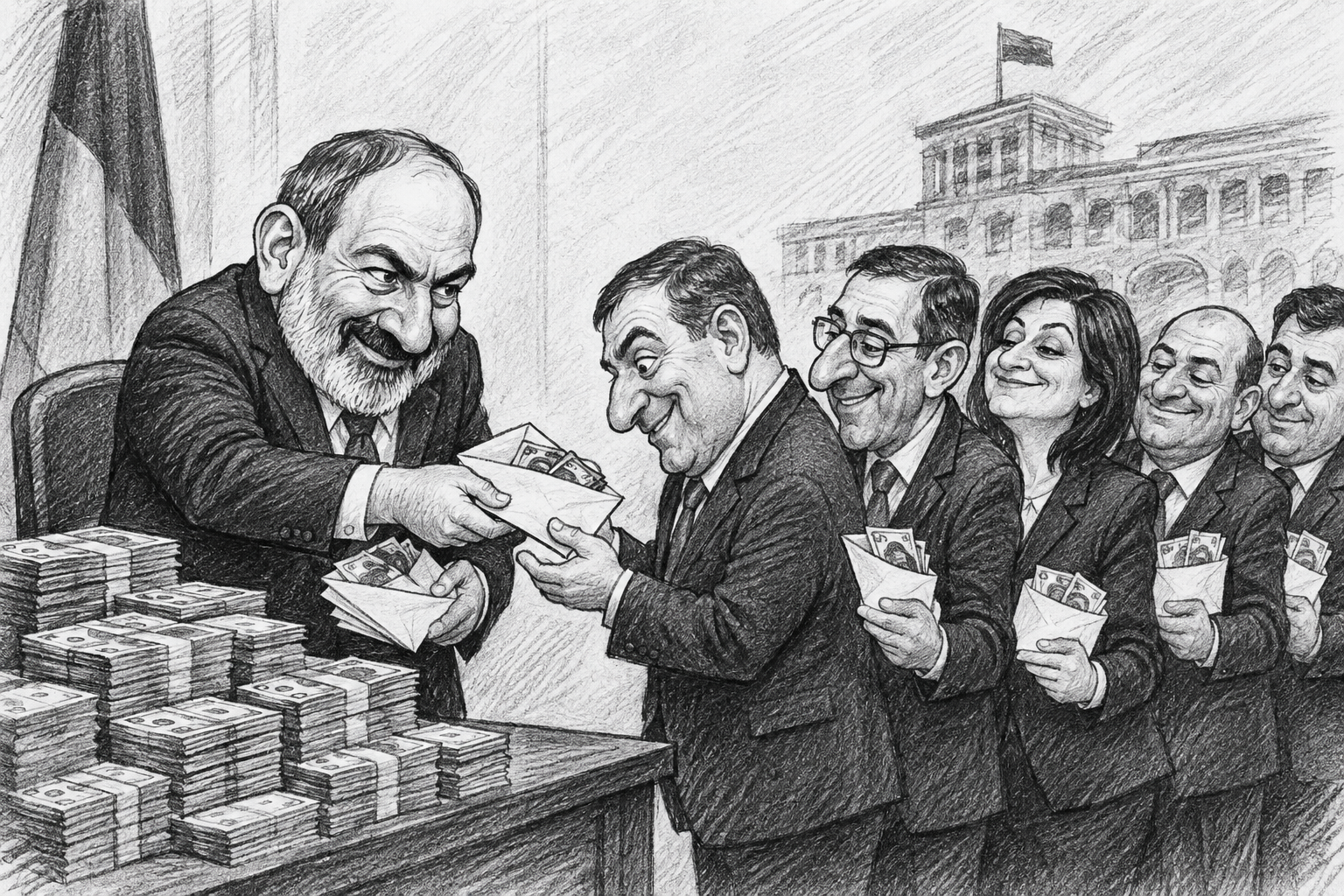
The government has allocated approximately 5 billion AMD for bonuses for government officials and employees of the state system. Questions regarding the distribution of the funds, their justification, and the criteria for awarding bonuses continue to remain on the public oversight agenda. In July, Radio Azatutyun and Factor TV addressed this topic.
According to Radio Azatutyun’s publication, anti-corruption expert Varuzhan Hoktanyan had pointed to the risk of political corruption in connection with the decision to award bonuses. Factor TV had presented the distribution of allocations by government agency.
The total amount of bonuses does not in itself provide a complete picture of the use of public funds. To do so, it is also necessary to examine the procedure for distributing the money, the range of recipients, and the criteria for evaluating work underlying the payments.
How Much Money Was Allocated to State Bodies?
According to Factor TV’s publication, 4 billion 961 million 725 thousand AMD was allocated for bonuses. The money was to be provided from the government’s reserve fund.
According to the data presented in the publication, the following amounts were allocated to individual state bodies:
Source: Factor TV. The table presents some of the allocations mentioned in the publication.
These data show the amounts allocated to state bodies, but they do not clarify how the funds were distributed among individual employees. Nor is it possible to determine from the published information what calculations were used to establish the amount of each bonus.
What Bonus Criteria Are Applied?
Appropriate legal grounds and established procedures are necessary for awarding bonuses to government officials and employees. However, information about the distribution of funds alone is insufficient to assess the extent to which these payments correspond to work results.
In particular, clarification is needed regarding the principles used to determine bonus amounts, the methods for evaluating employee performance, and the criteria applied across different state bodies.
To assess the effectiveness of the use of public funds, it is also necessary to understand whether bonuses are linked to the achievement of previously established objectives, the quality of work, or improvements in services.
If bonus amounts are determined at the discretion of managers, it is important to establish what oversight mechanisms are in place and how compliance of these decisions with established rules is verified.
In Radio Azatutyun’s publication, Varuzhan Hoktanyan had raised the issue of the risk of political corruption. To assess these risks, the justifications for bonus decisions, the criteria applied, and complete data on payments are important.
Published Data on Previous Bonuses
According to information published by Radio Azatutyun, another 3.5 billion AMD had been allocated for bonuses in the state system at the end of 2025. The publication also mentioned the amounts received by individual officials: approximately 3 million AMD for members of parliament, up to 7 million AMD for ministers, and 12 million AMD for Prime Minister Nikol Pashinyan.
These data make it possible to compare the amounts allocated for bonuses during different periods. However, a comprehensive assessment also requires examining the payroll funds of state bodies, the legal regulations governing bonuses, and the justifications for allocations in each year.
During discussions of the draft 2027 state budget, the publication of these data would make it possible to assess the scale of bonus expenditures and their place within the overall structure of public spending.
What Data Are Needed for Public Oversight?
To assess the transparency of the bonus-awarding process, it is necessary to examine the relevant government decision, the calculations underlying the allocations, the bonus regulations of state bodies, and reports on payments.
In particular, it is important to establish:
- On the basis of which legal act the approximately 5 billion AMD was allocated;
- How the amount of money provided to each state body was determined;
- According to what principles employees were awarded bonuses;
- What kind of oversight is exercised over the distribution of the allocated funds;
- What data are published on the results of the bonus-awarding process and the payments.
Answers to the above questions would make it possible to establish whether the distribution of allocations is based on uniform performance evaluation criteria and to what extent the financial decisions of state bodies are accessible to public oversight.
However, as of now, it is not publicly known on the basis of what work indicators, evaluation criteria, or recorded results the decision was made to award bonuses to government officials and employees.