
From the Promise “Amulsar Will Remain a Mountain” to the Launch of Mine Operations: Environmental Warnings, Controversial Decisions, and a $150 Million Risk for the State
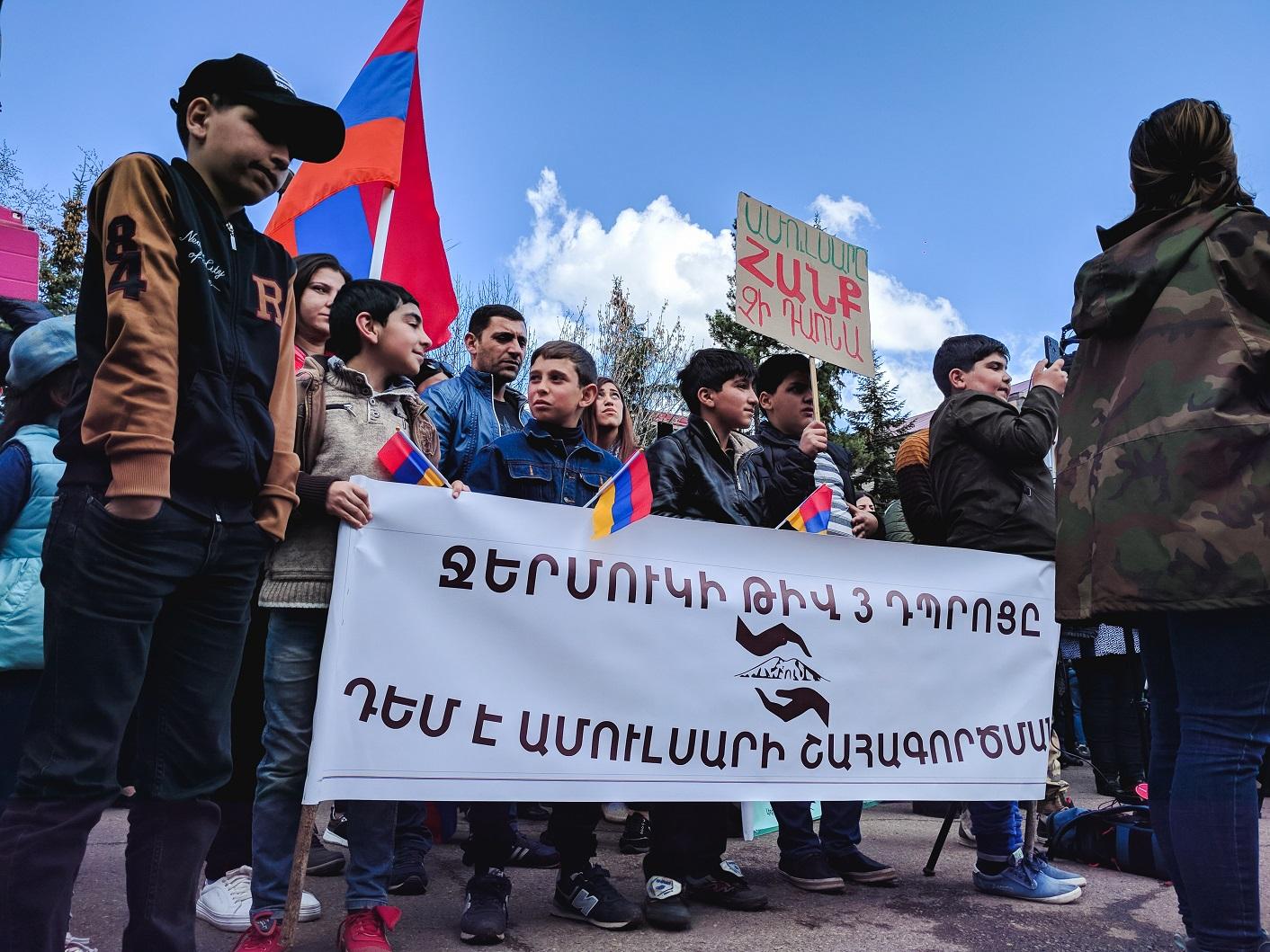
On October 10, 2026, the launch of operations at the Amulsar gold deposit was officially announced in Armenia. Nikol Pashinyan participated in the ceremony, presenting the project as a source of jobs, tax revenues, and development for neighboring communities. However, behind the ceremonial launch lies a decade-long history of protests, expert warnings, and decisions whose consequences have yet to be assessed.
In 2018, Pashinyan came to power on a wave of mass protests, and the slogan “Amulsar Will Remain a Mountain” became one of the symbols of public resistance to the project. Now, the government that had also received political support thanks to its promises to take citizens’ voices into account has created the conditions for the mine to operate. The issue is not only how much gold will be extracted. It is also important to understand how well-founded the environmental safety guarantees are and who will pay the price if the protective measures prove insufficient.
Timeline: From Environmental Conflict to Mine Operations
2014–2016: Granting of the license and start of construction. In 2014, the project received a mining license. In 2016, Lydian submitted an updated version of the environmental and social impact assessment, after which the permit documents were also revised. In October of the same year, the company announced the start of construction. Subsequently, the completeness of the initial environmental data and assessments became the subject of serious criticism from specialists and environmental organizations.
2017: First large-scale expert warnings. Independent experts began publishing analyses, drawing attention to acid drainage, the possible leaching of metals from mountain rocks, and the resulting risks to water resources. Questions also arose as to whether the protective measures planned by the company were appropriate for Amulsar’s geological characteristics.
2018: Blockade and political conflict. Following mass protests and the blocking of roads leading to the mine, construction effectively came to a halt. In November, around 3,000 residents of the enlarged Jermuk community participated in a petition campaign directed against the project. On December 18, the community council adopted a decision aimed at developing an environmentally oriented economy and prohibiting metal mining within its territory. Nevertheless, the project was not definitively closed, and its subsequent fate became the subject of political and legal conflict.
August–September 2019: ELARD assessment and the decision to continue discussing the project. The government received the conclusion of the international expert group ELARD. According to the official presentation, no direct connection had been found between Amulsar’s groundwater and Jermuk’s thermal springs, while the risks to the Arpa, Darb, and Vorotan rivers could be managed if the proposed measures were properly implemented. At the same time, in September, the Minister of Environment stated that the initial data had been inaccurate in several areas and that additional environmental and legal procedures were necessary. These circumstances required not only a political decision but also verification of whether the identified deficiencies had actually been eliminated.
2023: Agreement to resume the project. On February 22, the Government of Armenia, the Eurasian Development Bank, and Lydian Armenia signed a tripartite memorandum on resuming the mine operation project. Non-governmental organizations opposed the move, arguing that the risks to water resources and the long-term consequences of acid drainage had not been adequately assessed.
February 27 – May 4, 2025: State guarantee and legal dispute. Government Decision No. 220-A provided for a budgetary guarantee of up to $150 million to enable Lydian Armenia to attract loans. On April 28, non-governmental organizations and citizens filed a lawsuit with the Administrative Court, demanding the annulment of this decision. The plaintiffs are challenging its legality and the sufficiency of its financial justifications.
October 10, 2026: Official launch of the mine. Nikol Pashinyan participated in the launch of mine operations, as well as in the ceremony for the first gold production and smelting. The authorities presented the project as a source of economic development for the country and neighboring communities. However, the launch of the mine does not eliminate the expert disagreements, protests, and legal disputes that have accumulated over the years.
The Media Sounds the Alarm
Warnings about Amulsar were voiced long before the launch of mine operations. This is not just a matter of publications by activists: for years, Armenian media outlets have covered specific objections raised by independent experts regarding the project’s environmental documents.
In June 2018, Hetq published the findings of international experts Ann Maest, Andre Sobolewski, Andrea Gerson, and Roger Smart. The experts pointed to shortcomings in the assessment of acid drainage, the limited scope of the initial sampling, and the possible underestimation of the volumes of contaminated discharges.
According to their assessment, if the project were implemented, acidic water and pollutants could enter groundwater, springs, the Arpa, Darb, and Vorotan rivers, as well as the Kechut Reservoir. The experts criticized the planned protective measures and warned that the impact could continue for decades after mining had ended. (Hetq: Experts’ findings, Bronozian Consultants: Water supply risks).
In January 2020, Aravot published Ann Maest’s analysis devoted to Lydian’s technical report. The expert criticized the insufficient transparency of several calculations, the assumptions concerning the generation of acid drainage, and the validity of predictions regarding the impact on water. The main problem she identified was that overly optimistic calculations could lead to an underestimation of the costs necessary for treatment and environmental protection. (Aravot, January 13, 2020).
In February 2023, Transparency International Anticorruption Center and several other non-governmental organizations opposed the resumption of the project. They stated that the government had failed to ensure a comprehensive reassessment of the environmental impact and had not sufficiently taken previous expert objections into account. (Transparency International Anticorruption Center, February 28, 2023).
On October 11, 2026, Past.am, in its publication, sharply criticized the launch of operations at the Amulsar gold mine, presenting it as a symbol of the authorities’ abandonment of their previous promises. The authors of the publication recall the slogan “Amulsar Will Remain a Mountain” and warn about the possible environmental consequences of open-pit mining, including acid drainage, the leaching of heavy metals, and the risks posed to the Arpa and Vorotan river basins and Jermuk’s water resources. Particular attention is paid to the objections concerning Lydian’s environmental documents and the conclusions of the international expert group ELARD. According to the periodical, the decision to operate the mine requires a fundamental public and legal examination. The main question is whether the authorities are prepared to ensure independent monitoring and assume responsibility in the event of possible consequences for nature and the population.
The common meaning of these warnings is clear: Amulsar’s environmental safety does not depend on how many times the authorities and the investor declare the project to comply with international standards. It depends on the quality of the studies, the reliability of the protective systems, and the ability to monitor the consequences over many years.
Armen Sargsyan and Lydian’s Political History
The history of the relationship between former President Armen Sargsyan and Lydian International, the company advancing the Amulsar project, deserves separate attention.
In March 2013, Lydian International announced that Armen Sargsyan had joined the company’s board of directors. In September of the same year, the company announced his departure following his appointment as Armenia’s ambassador to the United Kingdom. In 2018, Sargsyan was elected president of Armenia, and the Amulsar issue became one of the country’s most acute public conflicts. Later, Sargsyan stated that he had left the board of directors approximately five years earlier and had held no stake or received any profit from the project. (Armenpress, May 23, 2018).
The fact that the future president had previously served on Lydian’s board of directors is an important element of the project’s political history. It raises the need for a clear answer to the question of how relations between the investor and state institutions were shaped at different stages and how transparent the decisions determining the mine’s fate were.
Who Benefits, and Who Bears the Risks?
According to data published in connection with the launch of the project, 87.5% of Lydian Armenia belongs to the international mining company United, while 12.5% belongs to the Government of Armenia. The state’s stake provides an opportunity to benefit from the economic returns generated by the enterprise, but it does not eliminate the financial and environmental risks.
The guarantee of up to $150 million may create obligations for the state in connection with the project’s loans. Therefore, the public must be informed about the terms of the guarantee, the collateral requirements, the procedure for enforcing it, and the possible consequences if the borrower fails to fulfill its obligations.
There is also the environmental aspect. Acid drainage can occur when rocks containing sulfide minerals come into contact with water and oxygen. This process can lead to the formation of acidic discharges and the leaching of metals.
During gold heap leaching, when cyanide is used, the reliability of waterproofing, the collection of process solutions, the monitoring of discharges, and effective water treatment are particularly important. Expert warnings about the contamination of the waters of the Arpa, Vorotan, or Lake Sevan basin require long-term public oversight.
The government is obliged to regularly publish the results of independent water and soil studies, data on the condition of protective structures, information on taxes and royalties, as well as financial guarantees for the restoration of the area after the mine closes. Monitoring must cover not only the mining period but also the years that follow.
Instead of a Conclusion
Amulsar is not just about gold, jobs, and investment. It is a test of the state’s ability to protect the public interest when the economic interests of private investors collide with long-term environmental risks.
As of now, Pashinyan’s government has not provided transparent and well-founded explanations as to why a project that had been the cause of protests and serious expert objections for years ultimately received the green light and state financial support.
In this case, statements about development and international standards are not enough. Open access to documents, independent measurements, and clear accountability mechanisms are necessary.