
Manicures at the State’s Expense: How Much Armenian Taxpayers Pay for the Everyday Comfort of Pashinyan’s Family
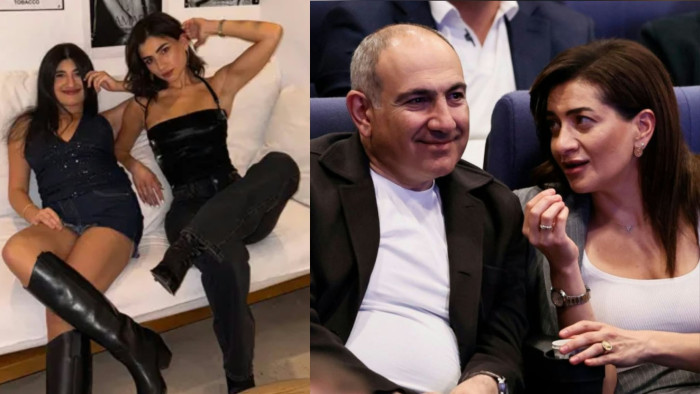
More than AMD 621 million is spent annually from the state budget on maintaining Armenia’s government residences. Calculated on a daily basis, this exceeds AMD 1.7 million. But this amount is not spent solely on the maintenance and security of the residences, utility payments, and upkeep of the surrounding areas. As Hraparak has found, through the “Government Residences Management” SNCO, the personal needs of the families of high-ranking officials are also covered, including the manicure and pedicure expenses of Prime Minister Nikol Pashinyan’s wife and daughters.
This flow of state funds is increasing year by year. In 2023, around AMD 542 million was allocated for the maintenance of government residences, while in 2024 it had already reached AMD 603 million. The amount planned in the 2026 budget has reached AMD 621 million 340 thousand 100, increasing by another AMD 18 million compared with the previous year. This means that more than AMD 1.7 million, or around $5,000, is spent on this structure every day.
This money is used to serve four high-ranking officials and their families: Nikol Pashinyan, Ararat Mirzoyan, Ruben Rubinyan, and Suren Papikyan. The SNCO is responsible for the government residences located in Yerevan’s Kond district, the surrounding area, utilities, security, and technical maintenance. Up to this point, everything is understandable: the state allocates funds to ensure the working conditions of the country’s highest-ranking officials. But the information presented by Hraparak shows that this care has gone beyond the boundaries of official necessity.
According to the newspaper, the SNCO also pays for the families’ everyday expenses, from food and toilet paper to household items and beauty salon services. Particularly noteworthy is the story of the beauty salon visited by the women in the prime minister’s family. Hraparak had previously written that the “Government Residences Management” SNCO pays for the salon’s services. Later, the government staff confirmed this information in a written response.
The official explanation raises more questions than it resolves. It turns out that at the end of each month, Nikol Pashinyan transfers a certain amount from his salary to the SNCO’s account, while the salon bills are then paid by the state organization. In other words, the prime minister does not directly pay the service provider for his family’s personal expenses, but instead arranges this through a state institution. Why is this intermediary necessary, how are the transferred amounts calculated, and who verifies the validity of the payments? The government staff’s response says nothing about this.
Hraparak also tried to determine how much it costs to use the services of the salon preferred by the prime minister’s family. It turned out to be one of the most expensive salons in Yerevan. A manicure with gel coating costs at least AMD 13,000, while a pedicure using KART professional cosmetics starts at AMD 20,000. Customers are served in a VIP salon, where appointments must be booked at least two days in advance. Cashless payment is also possible, but the salon must be notified in advance so that the accountant can prepare the appropriate invoice. After transferring the money, the customer can come in for the service.
According to the newspaper’s rough calculation, if the prime minister’s three daughters and wife use the salon’s services two or three times a month, the costs of manicures and pedicures alone could reach nearly $1,000 per month.
The most ironic aspect of this story is that Nikol Pashinyan came to power at one point promising to put an end to the privileged lifestyle of the previous authorities. Now it turns out that, as a result of this struggle, the beneficiaries of the privileges have simply changed. Anna Hakobyan and the prime minister’s daughters have no need to worry about beauty care: the state SNCO, accounting department, and entire payment mechanism are already in place. This is what came of the “velvet revolutionaries’” fight against privileges. Apparently, they too were unable to resist the temptation of living at the state’s expense.