
PUBLIC TRIBUNAL: The Gap Between the Report and Life
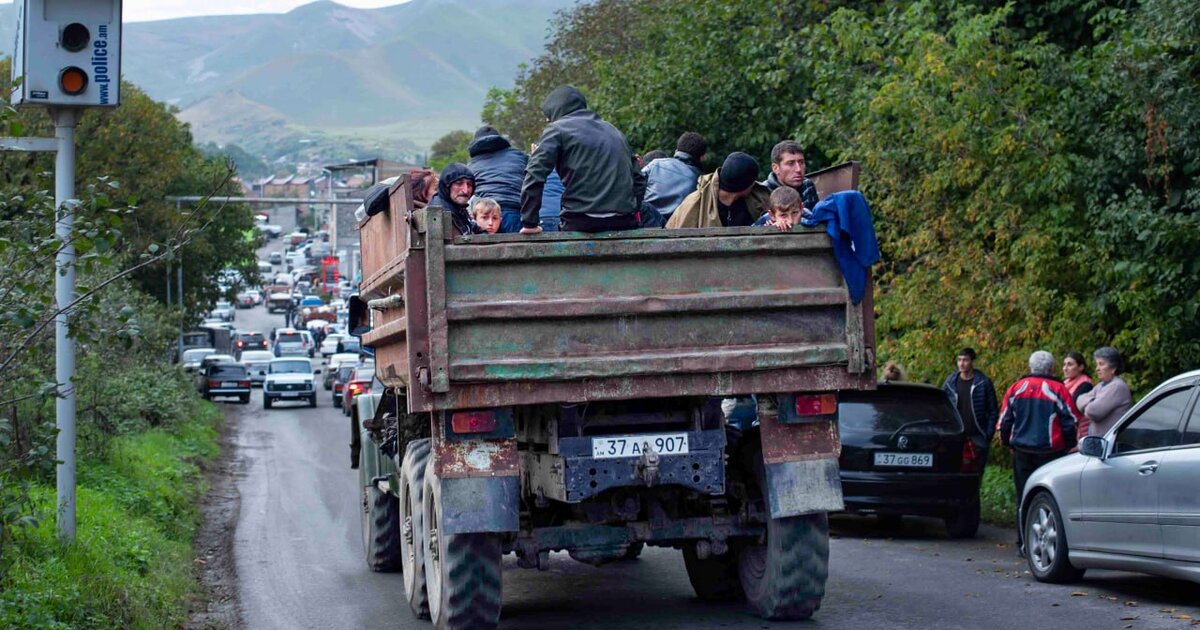
When looking at statements by the Armenian authorities about the situation of people forcibly displaced from Artsakh, one cannot fail to notice one significant feature: the government evaluates its policy primarily by the amounts of funds allocated, the number of certificates issued, and the number of assistance recipients. Meanwhile, Artsakh Armenians themselves assess it by completely different criteria having a roof over their heads, the ability to work in their profession, provide for their families, and receive medical care. The authorities and the people, therefore, often find themselves in two different dimensions of life. And the more impressive the reports become, the more clearly the gap between them emerges.
The Person Beyond the Statistics
Eighty-year-old Eleonora, who worked as a pharmacist in Stepanakert for around fifty years, is now asking the Armenian authorities for at least one room so that she can live on her pension. For twelve days, she slept on benches in the corridor of a hospital’s intensive care unit, next to her seriously ill son. Now the family is at risk of losing its temporary housing. The woman’s story was published by “5th Channel” on November 16, 2026.
In Stepanakert, Eleonora worked at a pharmacy for around half a century. At one point, when there were no other 24-hour pharmacies in the city, her pharmacy was open day and night. But after being forcibly displaced from her hometown, all this professional experience proved practically useless. The woman looked for work, even agreeing to work as a cleaner, but was rejected because of her age. A person who had devoted fifty years to her work could not find a use for even her most modest abilities in her new life.
At first, the family rented an apartment for AMD 150,000 a month. Then the landlord raised the rent to AMD 200,000, and paying that amount became impossible. Eleonora’s fifty-year-old son participated in three wars. After being hospitalized with severe pneumonia and heart failure, he spent twelve days in intensive care. His mother slept on hospital benches throughout that time. Now her son cannot walk independently and needs rehabilitation, but the family has no money for treatment. A young woman helped them.
Eleonora appealed to Nikol Pashinyan and the National Assembly, asking them to provide at least one room in a dormitory where she could live on her pension. According to her, she either received no response or was refused. There were also bureaucratic difficulties in obtaining citizenship: the woman was sent from one institution to another.
This story contains everything that is usually absent from government reports: an elderly person without housing, a sick son, no money for rehabilitation, an inability to find work, and unsuccessful appeals to state bodies. In a report, however, Eleonora will most likely be one of thousands of forcibly displaced citizens covered by one or another support measure. But behind such a designation, the most important thing is lost the specific fate of a person.
The Certificate and the Real Apartment
The housing program that Nikol Pashinyan’s government presents as one of the main tools for integrating Artsakh Armenians particularly clearly demonstrates the gap between administrative indicators and the results people expect.
On September 24, 2026, “Azatutyun” published the stories of Oksana Shahamiryan and Sevak Harutyunyan. When leaving Artsakh, Oksana’s family left behind a house, gardens, cars, and work. After three years of living in rented housing in Dilijan, she received a state certificate for AMD 20 million to purchase an apartment. However, for three months the family was unable to complete the transaction: court authorization was required to sign the documents on behalf of her sick mother-in-law. During all this time, they had to continue paying rent, while their income was barely enough for everyday expenses. Oksana also said that in Artsakh she earned more working in bakery production than she did in Armenia.
Sevak Harutyunyan left Artsakh at the age of 25. A child was born to the young family in Armenia, but because the citizenship process had not been completed, the parents could not yet benefit from the housing program. After receiving the documents, the family was entitled to a certificate worth AMD 12 million. But according to Sevak, this money is not enough to purchase an apartment for three people without taking out a loan. In Armenia, he opened a new bakery in place of the business he had left in Artsakh. The difference in production proved significant: previously, twenty sacks of flour were used daily, while now the figure is one or two.
“Azatutyun” provided another example on February 4, 2026. It took Artur Babayan a year and a half to obtain Armenian citizenship. State agencies required his parents’ marriage certificate, although his father was killed in Sumgait in 1988, and his mother is 75 years old. The fact of the marriage had to be established through court. After obtaining citizenship, a new problem arose: the seller was asking AMD 17 million for the apartment, while a bank appraiser valued it at AMD 11.5 million. In the end, the housing was sold for AMD 18 million. When considering another option, the bank valuation was also AMD 5.5 million below the asking price. According to Babayan, he was offered the option of taking out a loan or pledging gold.
Here, a fundamental feature of the program becomes apparent. The state provides a certificate, but its holder must independently overcome the difference between the amount of state support and the market price of the housing, which unscrupulous sellers deliberately jack up as much as possible. If documents prevent the transaction, it is necessary to go to court. If the bank valuation is lower than the seller’s price, the missing money has to be found. If a family cannot obtain citizenship, participation in the program is postponed. Formally, assistance has been provided, but actually purchasing an apartment remains the family’s problem.
According to the Ministry of Labor and Social Affairs, as of October 12, 2026, 8,643 families had received housing purchase certificates, while 4,911 had used them. Consequently, 3,732 issued certificates had still not been used as of that date. Since 2023, around AMD 146 billion has been allocated from the state budget to support displaced persons from Artsakh. A mandatory condition for participating in the housing program is Armenian citizenship for all family members.
The authorities can point to the number of certificates issued as an indicator of the work carried out. But a certificate is not an apartment, and allocated money is not proof that the housing problem has been solved. Until a family has purchased housing and gained the opportunity to live in it, the program remains unfinished for them and therefore largely ineffective overall. This is the difference between an agency’s reporting and a person’s situation.
The Profession That Had to Be Left Behind
The situation of Artsakh Armenians in the labor market is no less telling. Forced displacement deprived people not only of their homes and property. Many lost their jobs, businesses, professional connections, and familiar economic environment. In Armenia, they had to seek new sources of income, often agreeing to work unrelated to their previous profession.
On February 4, 2025, CivilNet published a piece about Margarita Abrahamyan, Ruzanna Asryan, and Marina Khachatryan. Margarita taught Armenian language and literature for sixteen years, then worked as an accountant in the banking system for three years. After being displaced, she contacted employers, participated in courses and retraining programs, but was still unable to find work.
Ruzanna Asryan taught Russian language and literature in Artsakh. In Armenia, she had to work first in a bakery and then in a grocery store. To return to teaching, she was required to pass an Armenian language exam and take tests on the Constitution and Labor Code. She declined this opportunity, including because of teachers’ low salaries. Marina Khachatryan is 58 years old. She worked for thirty years as a records clerk at the “Arevik” children’s hospital in Stepanakert. In Armenia, she first washed dishes at a restaurant and then found work in confectionery production. But the fourteen-hour workday proved too difficult for her.
Data from the State Revenue Committee provided to the publication show that from September 19, 2023 to January 21, 2025, 28,737 displaced persons from Artsakh were registered in Armenia as employees or income recipients under contracts. However, in December 2024, 21,824 people continued to work. Thus, by that time, 6,913 people among the workers previously registered had already ceased working. In state administrative institutions, 3,032 displaced persons worked, while as of January 21, 2025, 1,415 people were registered as individual entrepreneurs.
These figures show that initial employment does not always mean stable employment. Even less does it guarantee a return to previous income levels.
Hayk Khanumyan, analyzing the employment situation of displaced persons, compared the current indicators with pre-war data from Artsakh. According to the republic’s official statistics, in 2019 the economically active population numbered around 72,000 people. According to Khanumyan’s estimate, around 25,000 Artsakh Armenians were working in Armenia in March 2026. Khanumyan points out that existing employment programs cover a limited number of people and do not always ensure a long-term result.
A study by HCAV and the Advanced Public Research Group conducted in 2024 adds to this picture. Among the Artsakh Armenians who participated in the survey, 42.9% reported that they had a job in Armenia. At the same time, 68.5% said they earned less here than they had in Artsakh. 79.4% of respondents rented housing. These data provide an indication of the difficulties faced by a significant portion of those surveyed.
Thus, having a job does not yet mean restoring one’s previous independence. A person may be officially employed, receive a salary, and still be unable to purchase housing or provide for their family at the previous level. For the state, this may be an indicator of integration into the labor market. For the individual, it may be forced adaptation to conditions in which their previous profession and experience no longer provide the same opportunities.
The Document as an Obstacle
Problems with housing and employment are compounded by difficulties in restoring documents and obtaining citizenship. In some cases, a procedure that should confirm a person’s existing legal status turns into a months-long ordeal.
On February 20, 2026, CivilNet reported on Anush Abrahamyan, who had been trying for more than three months to restore her birth certificate. In the Soviet document, drawn up in Russian, her surname was written as “Աբրամյան” instead of the correct “Աբրահամյան.” Correcting the error proved difficult: it was necessary to restore not only her own birth certificate, but also her parents’ birth certificates and their marriage document.
The same publication tells the story of a 101-year-old woman. Her birth certificate remained in a village that came under Azerbaijani control in 2020. To restore the documents, authorities required her parents’ marriage certificate, dating back to 1918, as well as their birth or death certificates. These documents also remained in the village. Anush’s mother’s application for citizenship was considered for longer than the 90 working days stipulated by law. Meanwhile, the family continued paying rent for the house they intended to purchase.
The official position of the service is that documents required to obtain citizenship can be restored through civil registry offices. The Migration Service website also states that a simplified procedure is provided for those forcibly displaced from Nagorno-Karabakh, and that the legal deadline for considering an application is 90 working days.
But the mere possibility of restoring a document through a state institution does not solve all the problems. What is a person supposed to do if the necessary documents remained in a village they cannot access? How is a 101-year-old woman supposed to obtain her parents’ marriage certificate from 1918 if the document is located in territory under Azerbaijan’s control? The law establishes a procedure, but it does not eliminate the circumstances that make its implementation impossible.
Assistance That Does Not Solve the Problems
On June 20, 2025, a group of Artsakh Armenians gathered outside the government building, demanding that the social support program be restored. One participant in the protest, Anahit, told “Azatutyun” that she had lost her monthly payment of AMD 40,000, had no job, and was not receiving a pension. Her daughter was studying and working at the same time, but the family still did not have enough money for rent and everyday expenses. The protesters handed the government an open letter demanding that rental support continue without distinctions between categories of displaced persons and that the construction of social housing begin.
On October 29, 2026, the government extended two social support programs. According to a statement from the Ministry of Labor and Social Affairs, beneficiaries from certain categories of displaced persons will continue receiving payments until June 2027. From January to March, the monthly payment will amount to AMD 30,000, and from April to June - AMD 15,000. According to the ministry, around 46,000 people were using this program in October 2026.
The emergency support program for families in need was also extended separately: AMD 40,000 for the first forcibly displaced family member and AMD 10,000 for each subsequent member. In October, 8,600 families benefited from this assistance. The eligibility condition is an average monthly income of less than AMD 55,000 per family member. The program has been extended until December 2027.
The very fact that assistance has been extended is necessary for those who rely on it. But these payments are limited in duration and apply to specific categories of citizens. They do not solve the housing problem, create permanent jobs, or provide medical rehabilitation for those who need it. For families that have failed to restore an independent income, the reduction of the payment from AMD 30,000 to AMD 15,000 in spring 2027 means another reduction in the funds on which they depend.
This is precisely where the contradiction in the social policy of Pashinyan’s government becomes apparent. The authorities speak about integration, independence, and the inclusion of displaced persons in the country’s economic life. But integration cannot take place under conditions of bureaucratic delays and periodic insignificant handouts. It presupposes conditions in which a person is able to support themselves through work and does not depend on yet another decision to extend temporary assistance. If, after several years of living in Armenia, a family still cannot afford housing, while an elderly person cannot find work because of their age, then speaking of completed integration is clearly premature.
Who Represents Artsakh Armenians?
Material difficulties are not the only cause of alienation between displaced persons and the Armenian authorities. There is also the issue of political representation, which concerns the right of Artsakh Armenians to independently determine who will defend their common interests and conduct dialogue with the state.
A CivilNet publication dated February 3, 2026, says that after the mass displacement, official contacts between Yerevan and the former institutions of Artsakh continued for another six or seven months and then ceased. This was stated by the speaker of the exiled Artsakh parliament, Ashot Danielyan. According to him, the Artsakh side was told in response to its appeals that the social package was under the jurisdiction of the Armenian authorities and that decisions would be made at their discretion.
Hayk Khanumyan believes that political disagreements should not prevent dialogue with approximately 150,000 displaced people. He proposed maintaining contacts with the heads of communities and villages who know the situation of residents and are capable of conveying their specific problems to the authorities. Ruling Civil Contract party MP Zaruhi Batoyan, for her part, stated that Artsakh Armenians themselves should determine who has the right to represent them: no person or organization can automatically receive such authority.
This discussion reflects a fundamental divergence. The Armenian authorities insist on the unity of state institutions and do not recognize the possibility of a parallel system of government existing on the territory of Armenia. However, refusing to recognize the former institutions of Artsakh does not answer the question of how permanent contacts with the displaced population should be organized, or who will represent its collective interests.
Reports Instead of Solving Problems
On June 8, 2026, Nikol Pashinyan said that around 40,000 people from Artsakh had obtained Armenian citizenship. Almost three years after the expulsion of 115,000 people citizenship has been obtained for approximately one in three. If this figure is compared with the overall estimate of 140,000, the figure is less than one-third. Presenting such a result as an achievement of state policy is shameful. These figures were announced by the prime minister himself. Information on the 39,650 people who had obtained citizenship was confirmed by the deputy minister of internal affairs.
But behind these figures lies what people have to go through to obtain citizenship. Correcting an error in a birth certificate, searching for the documents of deceased parents, being required to provide a marriage certificate dating back to 1918, going from one institution to another. Even a 101-year-old woman must prove the circumstances of her parents’ lives, although the necessary documents remained in a village that came under Azerbaijani control. This is the price of the so-called simplified procedure, which by law should take no more than 90 working days but in practice turns into months of waiting and humiliating bureaucratic red tape. And this despite the fact that all refugees from Artsakh arrived in Armenia with Armenian passports.
The prospect of eight hundred billion drams over the next ten years looks even less convincing. Pashinyan speaks about future funding as though the very duration of the program were a guarantee of its success. But a person who cannot pay rent today cannot make use of a promise calculated through 2036. An elderly woman left without housing will not be helped by the prospect of further budget allocations several years from now. She needs a room now. A family whose son is seriously ill needs the ability to pay for rehabilitation now. An unemployed teacher needs a job now.
And as long as Pashinyan measures the result in dry figures, while a person measures it by the reality of having no roof over their head, the gap between government reports and life will remain.