ASHOT ARSENYAN’S “UNSINKABILITY” FORMULA
A businessman who knows how to make deals with any government
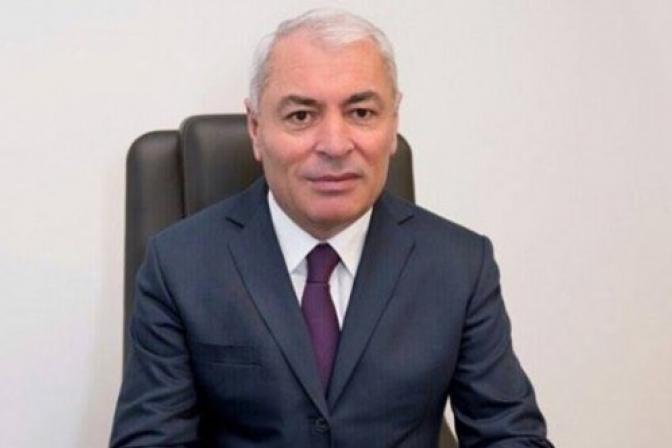
Known by the nicknames “Klos” and “Ashot of Jermuk,” Ashot Arsenyan is one of Armenia’s largest businessmen, whose Jermuk Group business empire has managed to maintain its influence for decades, regardless of the political changes that have taken place in the country. An investigation by HAN shows how Arsenyan remained “one of their own” both under the rule of the Republican Party, when he served as a member of the National Assembly for around 15 years, and after the 2018 “Velvet Revolution,” under Nikol Pashinyan’s government. The family’s main asset is Jermuk Group, a company that produces Jermuk mineral water and Pepsi-Cola in Armenia, as well as being the owner of the “Byuregh” brand.
From Factory Director to the Creation of Jermuk Group
Ashot Arsenyan was born in 1960 in the village of Gndevaz in Vayots Dzor Province. He began his working career at the Jermuk bus depot and later worked in the resort sector. In 1993, he was appointed director of the “Jermuk” mineral water factory.
In 1994, Armenian-American investor Kaytsak Zeytlyan invested around US$900,000 to modernize production. However, according to Zeytlyan’s former representative, Arsenyan later used corporate mechanisms and political influence to limit the investor’s participation in the company’s management, returning only around $100,000 of more than $1.25 million in investments. In 1999, Jermuk Group was established, which later took leading positions in the Armenian market.
Partnership with PepsiCo and Structures Connected to the President
In 2004, Arsenyan became the official distributor of PepsiCo in Armenia, and in 2008 acquired 85 percent of the shares of a PepsiCo factory operating in Georgia. In 2010, an agreement was signed to construct a new factory in Armenia, with the investment amounting to around US$12.5 million. President Serzh Sargsyan attended the official opening ceremony of the factory in 2011.
According to a Hetq investigation, since 2013, 50 percent of the shares of Jermuk International Pepsi-Cola Bottler LLC belonged to Highbury Food and Beverage Limited, which was linked to Armenia’s future president Armen Sarkissian. In 2017, that stake was transferred to Elsu Inc., which was also linked to the Sarkissian family. Although Arsenyan denied reports about the sale of the stake, the Hetq investigation confirmed through documents the participation in the project of structures linked to Armen Sarkissian.
The Silent MP and Influence Under the RPA
From 2003 to 2018, Arsenyan was a member of parliament from the Republican Party of Armenia, being reelected to the National Assembly three times. The media described him as a passive MP whose parliamentary activities were largely limited to “pressing the button.” According to publications, his parliamentary mandate was connected to the patronage of former National Assembly Speaker Hovik Abrahamyan, one of whose trusted “wallets” Arsenyan was considered to be. In 2015, Serzh Sargsyan awarded him the II Degree Medal “For Services to the Homeland.”
From the Change of Government to Integration into Pashinyan’s System
After the 2018 revolution, Arsenyan left the Republican Party and voted in favor of Nikol Pashinyan’s election as prime minister.
Soon, the family faced criminal prosecution: in June 2019, a criminal case against his son, Vahagn Arsenyan, concerning evasion of military service was reopened. However, after Jermuk Group donated snow-removal equipment to Yerevan Municipality, the case was closed, and Vahagn Arsenyan returned from Russia.
In 2021, he was appointed head of the Jermuk community and subsequently governor of Vayots Dzor Province. In 2026, after being elected as a member of the National Assembly, he gave up his mandate, preferring to retain the position of governor.
State Support Under Every Government
From 2015 to 2026, companies belonging to the Arsenyan family periodically received billions of drams in customs and tax privileges.
Under the former authorities, in 2015, the company was granted a three-year deferment on VAT payments and privileges for the import of equipment. Under Nikol Pashinyan’s government, in 2019 alone, Jermuk Group received privileges three times, totaling more than 1 billion drams. State support continued in 2023–2026, despite the fact that Vahagn Arsenyan was already holding public office. The total volume of approved state privileges exceeded 2.3 billion drams.
The “Byuregh” Residential Complex: A Point of Intersection with the Government
The “Byuregh” premium-class residential complex built by Jermuk Group in Yerevan has become a place where a number of key representatives of the ruling team have purchased apartments.
According to a Hetq investigation, Defense Minister Suren Papikyan purchased a 165-square-meter apartment for US$168,000, while its market value was estimated at around $412,000.
Apartments in this complex are also owned by National Assembly Speaker Alen Simonyan, Head of the Office of the Government Arayik Harutyunyan, and Armenia’s ambassador to the United States Lilit Makunts. Sasun Khachatryan, chairman of the Anti-Corruption Committee, also purchased an apartment in the same complex at a discount; he later closed the case initiated against Arsenyan.
Old Allegations and New Episodes
In 2018, businessman Murad Muradyan accused Ashot Arsenyan of appropriating the business and organizing an assassination attempt against him. Nikol Pashinyan instructed that the submitted facts be examined, but a criminal case was never initiated.
In 2023, a court found the head of Malishka community guilty of organizing vote-buying. According to the investigation, Arsenyan had transferred 13 million drams to him for the purpose of paying 10,000 drams for each vote. However, Ashot Arsenyan himself was not subjected to criminal liability.
The Family’s Wealth
According to Ashot Arsenyan’s 2017 declaration, his annual income exceeded 1.6 billion drams, while his cash holdings amounted to 253 million drams and US$4 million.
According to Vahagn Arsenyan’s 2025 declaration, his total income amounted to 1.59 billion drams. He also declared US$1.8 million, €800,000, and 45 million drams in cash, 25 properties (including 6 in the UAE and 1 in Germany), as well as Rolls-Royce and Bentley vehicles and Patek Philippe luxury watches.
The Reputation Crisis That Emerged in Russia
In 2024, following the death of a resident of Vladikavkaz who, according to official data, was poisoned by acetic acid found in a bottle of Jermuk mineral water, Russia’s Rospotrebnadzor blocked around 2.5 million bottles of Jermuk mineral water. A criminal case was initiated, while the deceased’s family filed a civil lawsuit seeking 1.5 billion rubles.
In 2026, new restrictions were imposed, as a result of which more than 1.4 million additional bottles were withdrawn from circulation. This became one of the largest reputational blows in the history of the Jermuk brand.
Conclusion
The HAN investigation shows that the change of governments in Armenia has not changed the position of the Arsenyan family. Governments, political slogans, and centers of power change, but for certain representatives of big business, the rules of the game remain the same.
Ashot Arsenyan’s “formula of unsinkability” is simple: according to the investigation, the ability to make deals with any government has been more important than production capacities or billions of drams in state privileges.