ANIF: From an Investment Project to Dissolution
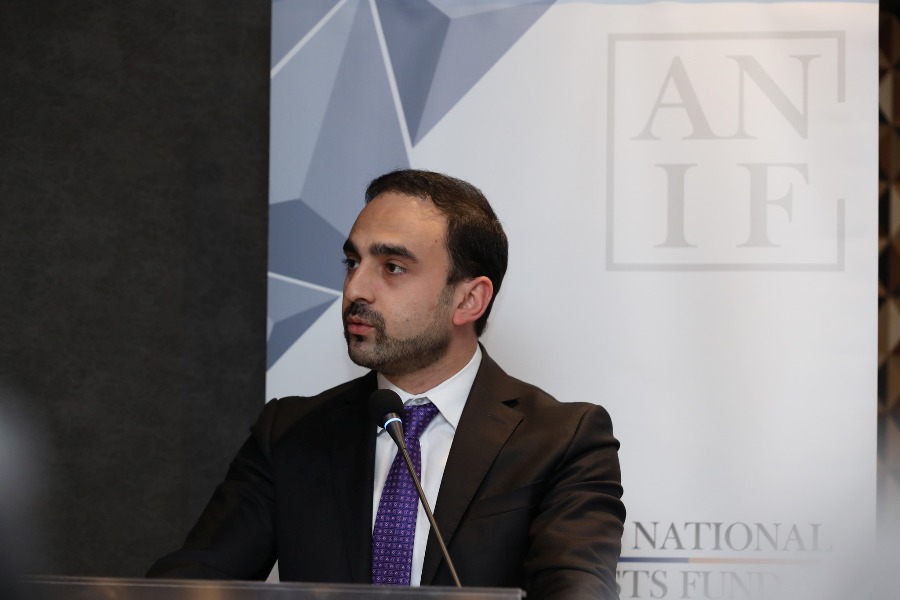
The ANIF Foundation was established in 2019 with public funds as the main symbol of Armenia’s new investment policy. It was intended to serve as the “showcase” of reforms: attracting capital, launching major projects, and partnering with international businesses. From 2019 until November 2023, Tigran Avinyan served as chairman of the foundation’s board of directors.
Instead of an investment breakthrough, however, ANIF ended its path with dissolution, scandals, criminal cases, missed deadlines on a number of projects, and the return of part of the funds to the state budget.
In 2020, the Entrepreneur + State subsidiary was established under the foundation, through which the state acquired stakes in private companies.
Between 2020 and 2023, this mechanism was used to invest AMD 6.65 billion and USD 4 million in ten companies, as well as in the EU-Armenia Small and Medium-Sized Business Fund. In return, the state received stakes of up to 49 percent.
The first serious problems emerged in 2022, when the foundation’s report was not approved due to discrepancies discovered in the documents of ANIF and its subsidiaries.
In November 2023, the powers of board chairman Tigran Avinyan and two other board members were terminated ahead of schedule. Later, questions arose regarding the transparency of the foundation’s operations, the quality of its accountability, and corporate governance.
Until January 2024, the foundation was headed by David Papazyan, after which he was replaced by Tigran Ghazaryan.
On May 23, 2024, the Government of Armenia decided to dissolve ANIF and transfer management of the state’s stakes to the State Property Management Committee.
Thus, an organization created as the flagship of a new investment policy ceased operations within several years amid allegations and concerns regarding accountability, management, and the efficiency of the use of public funds.
Where Did the Money Go? Connections, Acquaintances, and Controversial Investments
One of the largest recipients of ANIF funds was CFW CJSC, which was registered on April 26, 2023. Just eight days later, the foundation’s subsidiary, Entrepreneur + State, invested AMD 1.54 billion in the company, receiving a 49 percent stake. CFW’s charter capital amounted to AMD 3.14 billion.
CFW was headed by Karine Andreasyan. At the same time, she owned 33 percent of Lav Products, while the remaining 34 percent was owned by Mariam Pahlavuni, who also headed the company until December 2024. Later, Tigran Avinyan claimed that he had only become acquainted with Karine Andreasyan in the year of her appointment.
Another ANIF project involved cooperation with the American company Orbis in the field of cybersecurity. The American side received 51 percent, while ANIF received 49 percent. As part of the program, ten students were selected.
In 2023, the foundation allocated AMD 960 million to Berrymount CJSC to establish strawberry greenhouses. The company is owned by Dmitry Alexeyenko, whom the media have described as Avinyan’s classmate. The mayor himself confirmed that they knew each other, but denied having any influence over the investment decision.
Between 2021 and 2023, Entrepreneur + State invested AMD 6.65 billion (approximately USD 17.6 million) in ten Armenian companies, becoming shareholders in those companies.
The investment decisions were approved by the board of directors of the management company subordinate to ANIF. From 2020 to 2024, that entity was headed by Bella Manukyan.
Thus, a significant portion of the state investments was distributed through a mechanism that later raised questions not only about the effectiveness of the investments, but also about connections between the recipients of the funds and people within the government’s circle.