
Armenia’s Pharmaceutical Market: Big Money, a Narrow Circle, and the Failure of State Oversight
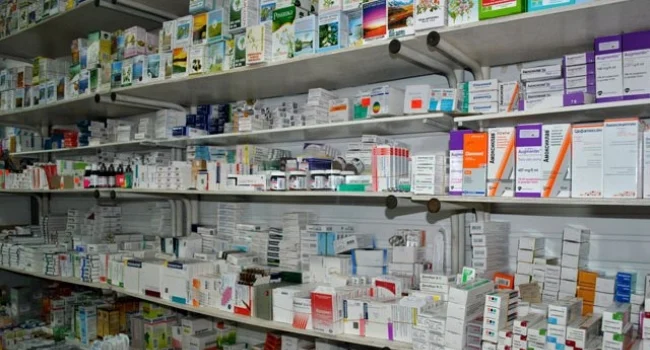
Pharmaceuticals are not an ordinary business. Large sums of money circulate in this sector, but the products being sold are directly connected to people’s health and lives. When purchasing medicine, a person is not simply paying with their own money; they are trusting that the package contains exactly the medicine stated on the label, that it meets the established requirements, and that it will not endanger their health.
Therefore, state oversight of the pharmaceutical market is not merely a matter of economic regulation. It is a critical component of healthcare and public safety.
However, data on Armenia’s pharmaceutical market in recent years raise a number of serious questions. Studies by the competition authority, government data, and journalistic investigations point to a highly concentrated market, years-long antitrust proceedings concerning the activities of major players, certain connections between pharmaceutical businesses and representatives of the state system, the sale of unregistered medicines, and warnings concerning the quality of medicines.
At the same time, the oversight system often identifies a violation only after it has already reached the consumer.
Three Companies Behind More Than Half of Medicine Imports
According to a study by the State Commission for the Protection of Economic Competition, in 2019, 60.3% of all medicine imports into Armenia were accounted for by just three major importers: “Vaga Pharm,” “Alpha Pharm Import,” and “Natali Pharm.” Market concentration was even higher in certain product groups.
A dominant position in itself is not a violation of the law. However, when more than 60% of the market is concentrated in the hands of three companies, it is difficult to ignore that circumstance, particularly when documented cases of antitrust violations have been recorded in the same market over different years.
The history of “Natali Pharm” is noteworthy in this regard. In 2009–2010, the competition authority found that the company had abused its dominant position against the competitor “Szni.” According to a Hetq publication, the company’s pricing policy could have resulted in the competitor being pushed out of the market. “Natali Pharm” was fined AMD 20 million.
In 2012, the company again came under the scrutiny of the competition authority and was fined AMD 50 million over actions carried out in the field of public procurement.
Another noteworthy episode concerned ceftriaxone. After a competing company had won the state tender, “Natali Pharm” offered the hospital the same medicine free of charge.
These cases concern different years, but taken together, they show that problems with the competitive environment in the pharmaceutical market are not limited to a single incident. And when competition is restricted, consumer choice is restricted as well. For a patient standing at a pharmacy counter, this is no longer a matter of economic theory, but a very concrete question of choice.
The Intersecting Interests of Pharmaceutical Business and the State System
The other side of the problem concerns the relationship between pharmaceutical businesses and the public healthcare system.
In 2020, Hetq published an investigation into the company “Armpharmacia”, which had previously been headed by Anahit Avanesyan, who at the time was Deputy Minister of Health. According to the publication, her husband and mother had also held management positions at the company.
According to the investigation, between 2017 and 2020, “Armpharmacia” had signed 240 contracts with 44 state institutions, with a total value of approximately AMD 606.7 million. Some of those contracts had been concluded after Avanesyan was appointed deputy minister.
Avanesyan denied that she or her husband had any ownership stake in the company and stated that her previous work at “Armpharmacia” had no connection to her subsequent activities in the state system. Therefore, this publication in itself is not evidence of a corruption violation.
However, such circumstances cannot be excluded from public attention. When a person who previously worked in the private pharmaceutical sector later holds a government position regulating the same market, while the state is simultaneously a major purchaser in that sector, preventing conflicts of interest becomes particularly important.
In such situations, transparency of connections, openness of decision-making, and a clear separation between private and public interests are crucial.
Unregistered Medicines at Pharmacy Counters
One of the most concerning manifestations of the problem is that an unregistered medicine can reach an ordinary consumer.
In 2025, Hetq journalists purchased 13 medicines from pharmacies in Armenia that were not registered in the country. They included Ozempic, Tegretol, Forxiga, and other medicines. In several cases, the packages carried excise stamps, while buyers were provided with cash-register receipts for most of the medicines.
This fact is important for understanding the actual scale of the problem. The issue is not limited to products reaching consumers through openly illegal channels. Unregistered medicines are also being found in ordinary retail pharmacy networks.
State registration of a medicine is not a mere formal requirement. It is an oversight mechanism through which the quality, origin, safety, and conditions of circulation of a medicine are assessed. When a medicine falls outside this system, the state guarantees available to the patient are significantly reduced.
A patient does not enter a pharmacy as a pharmaceutical-market specialist. They come to receive treatment and assume that the checks they cannot perform themselves have already been carried out by the state.
Billions in Fines, Yet the Same Violations Continue
Armenian oversight authorities regularly identify violations in the circulation of medicines. In 2023, the inspection body reported AMD 463.29 million in fines. A significant portion of the violations concerned unregistered or illegally imported medicines.
In 2024, according to Factor.am, the total amount of fines had reached approximately AMD 3 billion, of which around AMD 2.9 billion concerned the sale of unregistered medicines or medicines imported in violation of legislation.
These figures indicate a significant volume of detected violations. But a fine in itself does not mean that the problem has been solved. If violations of the same nature are subsequently detected again, it means that the sanction does not eliminate the conditions that give rise to them or allow them to recur.
In 2026, Hetq wrote about numerous reports concerning the online sale of unregistered medicines and addressed the limitations of the oversight authority’s powers. Another Hetq publication examined the market for unregistered medicines and the difficulties faced by the state system in closing the channels through which these products enter the country.
Thus, the same problem continues to return to the agenda in different forms. The state detects the violation, records it, and imposes a fine, yet new reports concerning the circulation of unregistered medicines continue to emerge.
Medicine Safety Beyond Effective Oversight
A separate and particularly sensitive issue is the quality of medicines. This is not simply an administrative violation. The consequences of a poor-quality medicine or one that does not meet established requirements can directly affect a person’s health.
In 2025, Hetq reported on an international study in which 20% of the 189 medicine samples tested failed to meet quality requirements. In 2023, 400 units each of the medicines Doxobyra and CTX-GLS had been imported into Armenia.
In November 2025, the Ministry of Health told Hetq that it had not received reliable negative information concerning these medicines from international organizations or foreign regulatory authorities and therefore had not taken corresponding action. At the same time, the journalists stated that they had provided the ministry with the study’s findings before publication.
An international study or journalistic investigation, naturally, cannot replace national expert testing. But when a state body receives information about a potential problem, the effectiveness of the oversight system is also determined by how quickly, transparently, and thoroughly subsequent checks are carried out.
The problem of medicine circulation, however, does not end within the pharmacy network.
In September 2026, Hetq reported on the use of unregistered medicines containing botulinum toxin in Armenian aesthetic clinics. According to the publication, only three medicines in this category are officially registered, while other products were also being used in medical practice.
Thus, the issue concerns not only the pharmacy counter. It also reaches medical institutions, where a patient or client is even less able to determine independently whether the medicine being used is registered, subject to the necessary oversight, and compliant with established requirements.
Ineffective State Oversight
When the facts are placed side by side, the picture becomes fairly clear.
A significant portion of the market is concentrated in the hands of a limited number of major importers. Antitrust proceedings concerning the activities of major players have been recorded for years. In certain cases, professional and family connections have emerged between pharmaceutical businesses and the state system, requiring strict oversight of conflicts of interest. Unregistered medicines are being found in ordinary pharmacies, fines imposed for their sale reach billions of drams, while new reports and cases of violations continue to appear on the public agenda.
The most problematic link in this entire chain is the effectiveness of oversight. The state system is capable of detecting violations that have already occurred, but their recurrence shows that preventive mechanisms are not working with sufficient effectiveness.
Billions of drams in fines have not eliminated the circulation of unregistered medicines, the market’s long-standing concentration has not disappeared, and new violations continue to be uncovered. When oversight cannot reliably close the channels of illegal circulation, the most vulnerable party bears the consequences: the patient. The violator may be fined, and the state body may record yet another statistic, but none of that can restore anything to a person who has lost their health.