
MoD State Procurement: Major Contracts, Suppliers, and Criminal Cases
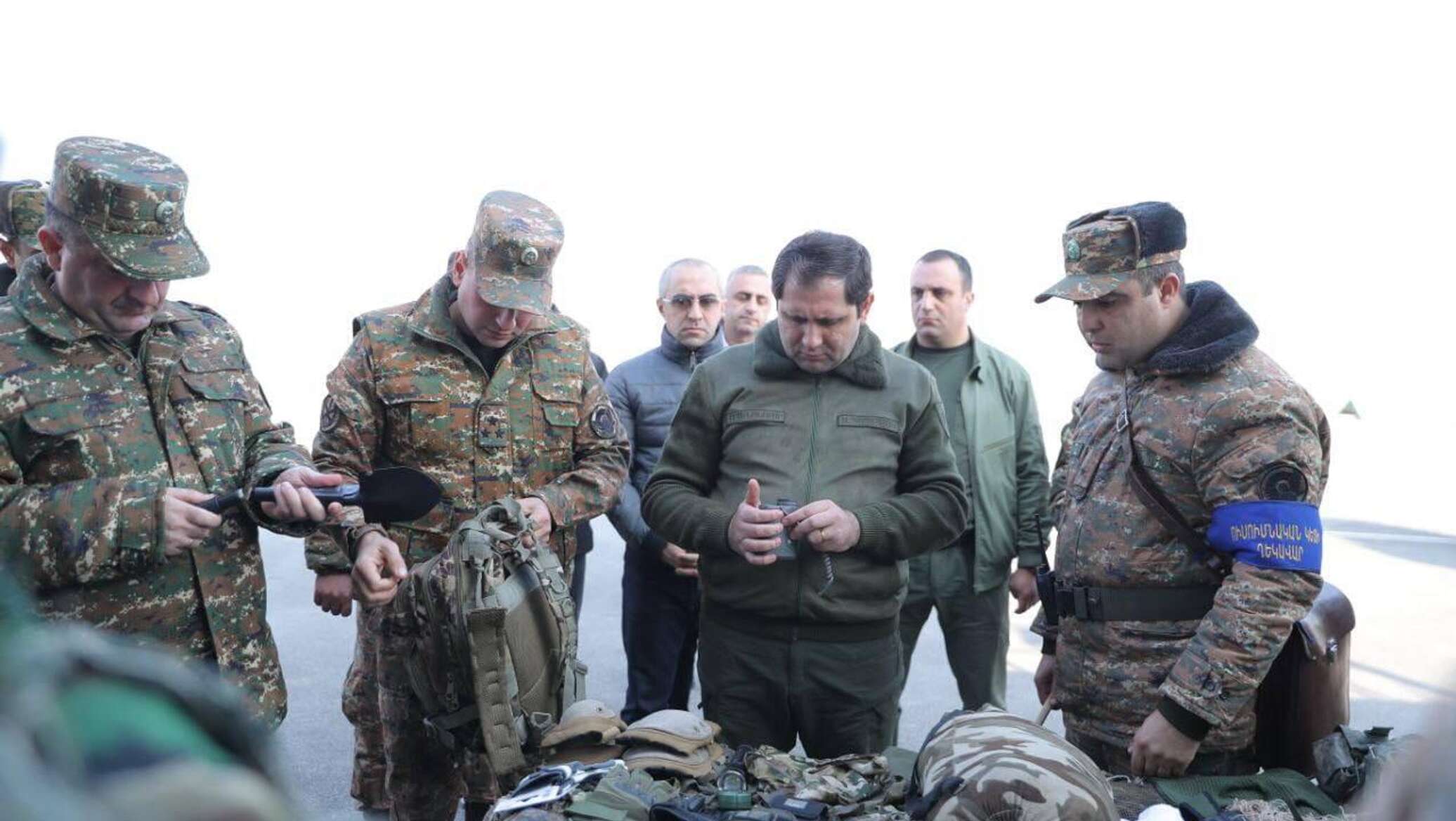
During Suren Papikyan’s tenure, the opposition and media increasingly drew attention to the growing volume of single-source procurements by the Ministry of Defense, without a full competitive procedure. The authorities explained this by citing the urgent need to rearm the army following the 2020 war.
Nevertheless, critics noted that this mechanism began to be used not only for the procurement of weapons and special equipment, but also for a much broader range of goods and services. Against this backdrop, questions were increasingly raised about corruption risks, the possible return of the practice of “kickbacks,” and the emergence of contractors closely connected to the authorities’ system.
On January 25, 2024, the Armenian government effectively closed off a significant portion of information concerning Ministry of Defense procurement. According to the government decision, the following began to be considered state secrets:
- MoD procurement plans,
- procurement requests,
- technical specifications,
- the actual process of organizing the procurement of military-purpose products,
- information about companies supplying weapons, services, and works for the defense sector.
Formally, the decision was explained by national security concerns. In practice, however, it further restricted the possibilities for public oversight of defense-budget spending.
Despite the closed nature of the system, individual criminal cases are nevertheless periodically made public.
Thus, on May 5, 2025, it became known that a case involving seven people, including Ministry of Defense officials and company executives, had been sent to court. The investigation alleges that ministry officials received especially large bribes and abused their powers during the implementation of construction contracts at one of the military units.
According to the investigators’ version, instead of the materials stipulated by the project, the contractor used cheaper materials, while fabricated certificates of completed work were prepared with the assistance of the organization responsible for technical supervision. The damage caused to the MoD budget was estimated at more than 81 million drams.
The investigation also alleges that ministry officials received bribes for accepting unfinished or substandard work. In one episode, the amount was 10 million drams, while in another, it was 2.1 million drams, which were paid to overlook violations committed during the performance of the contract.
In addition, according to the investigators’ version, representatives of contractor companies may also have interfered with the tender process itself. It is stated that an illegal payment was transferred to a former MoD employee to secure victory in the procurement process, thereby causing damage to the other participants in the tender.
The defendants were charged under articles concerning embezzlement on an especially large scale, receiving and giving bribes, abuse of official powers, and other crimes. The case is being examined by the Anti-Corruption Court of Armenia.
Against the backdrop of the increasing secrecy surrounding defense procurement, such cases only intensified questions about the system for distributing contracts within the Ministry of Defense. This was especially the case when the public could no longer see either the tenders themselves, the suppliers, or the volume of work.
And the less information became public, the more frequently corruption stories began to emerge in the form of criminal cases.
MoD Non-Military Procurement: Fuel, Banks, Grants, and “Events”
After a significant portion of defense procurement was transferred to the state-secrecy regime, relative transparency has been maintained mainly with regard to the Ministry of Defense’s non-military contracts. It is precisely these data that make it possible to partially see the ministry’s largest financial flows.
During Suren Papikyan’s years as minister, one of the largest contracts was the deal concluded with “Max Oil” in February 2026 for the supply of aviation fuel. The value of the contract amounted to 6.13 billion drams.
According to media reports, the company is linked to Armenian businessman and former Republican Party of Armenia MP Harutyun Pampukyan.
“Max Oil” entered the state procurement system actively starting at the end of 2021, supplying fuel not only to the Ministry of Defense but also to the Prime Minister’s Office. The company concluded a number of major contracts with the MoD:
- July 2022 — 1.07 billion drams for the supply of diesel fuel,
- October 2022 — 3.4 billion drams for the supply of liquid fuel,
- February 2026 — 6.13 billion drams for the supply of aviation fuel.
Another major fuel supplier to the MoD became the company “CPS.” In 2022 alone, three contracts were concluded with it:
- 4.48 billion drams,
- 2.23 billion drams,
- 2.27 billion drams.
Earlier, “Mega Trade” also appeared among the suppliers. Media outlets linked the company to the circle of MP Khachatur Sukiasyan (Grzo). Contracts worth approximately 5.5 billion and 1.3 billion drams had been concluded with the company.
The transaction attracted attention not only because of the amount involved, but also because of its political context. Media outlets drew attention to the fact that one of the founders of “Mega Trade,” Tigran Badalyan, had previously established “Sil Capital,” which was later transferred to a relative of the Sukiasyan family.
Additional questions arose following publications concerning “Mega Trade’s” connection to the “Ran Oil” gas-station network, which was later acquired by “Sil Concern,” owned by the Sukiasyan family.
The speed of the company’s growth was particularly noteworthy. Founded in February 2020, it received a 1.3 billion-dram contract just a few months later, and in less than a year, another urgent contract worth 5.5 billion drams.
“Ardshinbank” also appeared among the major recipients of funds. In 2024 and 2025, contracts worth 3.71 billion and 3.28 billion drams, respectively, were concluded with the bank.
The funds were transferred within the framework of agreements between the Ministry of Defense and the commercial company “KAMAZ” and were classified as expenses “not considered procurement.”
During Papikyan’s tenure, funding for the “Humanitarian Demining and Expertise Center” SNCO also increased significantly. Starting in 2022, the organization was periodically allocated grants worth hundreds of millions of drams:
- February 2022 — 317.5 million drams,
- December 2022 — 295 million drams,
- 2023 — 215.3 million drams,
- 2024 — 483.7 million drams,
- 2025 — 144.4 million drams,
- 2026 — 306.6 million drams.
At the same time, it has not been possible to find public data on comparable volumes of grants in previous years.
The Ministry of Defense’s cooperation with “Deluxe Dental Lab” also intensified. Before Papikyan’s tenure, only one contract had been recorded—in 2019, for 2 million drams.
However, the amounts subsequently began to increase sharply:
- 2022 — 17 million drams,
- 2023 — 17 million drams,
- 2024 — contracts worth 51 million and 8 million drams,
- 2025 — a purchase of dental implants worth 126.1 million drams and another contract worth 16.3 million drams.
The company was founded in 2014, with Robert Hakobyan listed as its owner.
Particular attention was attracted by the Ministry of Defense’s contract with “Domino Video Production,” worth 419.6 million drams. The subject of the contract was listed as “expenses related to the event.” It concerned the May 28 celebration.
The questions concerned not so much the scale of the spending as the lack of detailed information about some of the most expensive segments of the event industry, such as the rental of stage structures, LED screens, lighting and sound equipment, installation work, and decorative design.
These are precisely the areas considered to be the non-transparent part of the events market, where the cost of services can differ several times over.
“Domino Video Production,” founded in 2010 and owned by Ashot Arakelyan, began actively participating in state procurement only in recent years.
In addition to the Ministry of Defense, in 2025 the company also received:
- a contract from the Prime Minister’s Office worth 130.5 million drams for organizing a cultural event,
- a contract from the Ministry of Health worth 32.7 million drams for branding the Universal Health Insurance Fund,
- a contract from Yerevan Municipality worth 34.8 million drams for holding a cultural event.
The analysis of non-military procurement shows a stable trend: a circle of companies is gradually forming around the Ministry of Defense that, amid the system’s increasing secrecy, regularly receive contracts worth billions of drams.
And the less information remains publicly accessible, the more necessary it becomes to carefully examine even such seemingly secondary procurements—from fuel and bank transfers to dental implants and the organization of celebrations.