
Billions Without a Tender: Why Are Procurement Contracts for a Strategically Important Road Raising Questions?
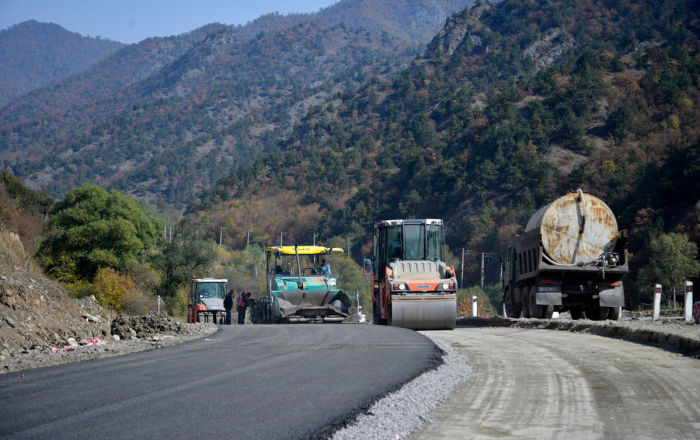
A Strategic Highway After the War
After the 44-day war in 2020, Armenia’s transport security became one of the priority areas of state policy. A section of the Goris–Kapan highway came to be located in the immediate vicinity of the new borders, while some of its sections passed through disputed territories. Under these circumstances, the construction of the Tatev–Aghvani–Kapan alternative road acquired strategic importance, ensuring secure communication between Syunik Province and the rest of Armenia, as well as with Iran.
However, a 2021 investigation by Hetq.am shows that alongside the urgent need to construct the road, questions arise regarding the transparency of the process of distributing state contracts.
Only One Contractor Was Selected Through an Open Tender
According to a publication by Hetq.am, the reconstruction of the 43-kilometer road section was divided among three companies.
Builder Construction received a contract worth approximately 623 million drams as a result of an open tender. The company is owned by businessman Ghukas Grigoryan, whose business structures had previously also participated in the implementation of major infrastructure projects.
The holding of an open tender in itself is consistent with established state procurement practices and, formally speaking, does not give rise to objections.
Nearly Three Billion Drams Without Competitive Procedures
The procurement for the second section of the road was carried out through an entirely different procedure.
“Vosmar” LLC received a 2 billion 786 million dram contract through a “single-source urgent procurement” procedure, that is, without an open tender.
As Hetq.am notes, this is the largest contract ever concluded by the company within the framework of state procurement.
The publication also draws attention to the company’s ownership structure. The company’s main shareholder is former Goris Mayor Nelson Voskanyan and members of his family. It is also recalled that Nelson Voskanyan was previously convicted in a criminal case concerning abuse of official powers during his tenure as mayor.
The fact of the company owner’s conviction does not in itself mean that the law was violated when the contract was concluded. However, the allocation of such a large sum without a competitive procedure objectively raises additional questions about the criteria used to select the contractor.
Another Billion, Again Without a Tender
Construction of the third section of the road, worth 1 billion 220 million drams, was entrusted to “Karavan” LLC, again through a single-source procurement procedure.
According to Hetq.am, the company had relatively limited experience participating in state tenders in Armenia, although it had been actively operating in the road construction sector in Artsakh. The publication also mentions the alleged close ties between the company’s owner and the leadership of Artsakh at the time.
Thus, the two largest contracts, with a total value of nearly 4 billion drams, were concluded without open competitive procedures.
Another Reason for Public Questions
The Hetq.am investigation also draws attention to another government initiative.
In July 2021, a draft of amendments was presented that envisaged reducing the amount of information published about single-source procurements. In particular, it was proposed to remove from public access the grounds for carrying out such procurements, the subject of the contract, and the full text of the contract.
As specialists in the field of public finance point out, such initiatives inevitably give rise to public debate, since transparency in public spending is one of the most important tools of public oversight.
The construction of the Tatev–Aghvani–Kapan road was indeed vital for ensuring the country’s transport security. However, it is precisely strategically important projects that require the greatest possible openness and accountability.
When nearly 4 billion drams is allocated without open tenders, while companies linked to former officials and influential businessmen appear among the beneficiaries of the contracts, questions naturally arise regarding the transparency of procurement procedures and the effectiveness of public oversight.
These questions in themselves do not mean that violations have been recorded. However, as the Hetq.am investigation shows, they merit exhaustive and convincing explanations from state bodies.