
Hetq: The State Is Demanding Millions of Drams and Interest Back from Beneficiaries Who Failed the “Smart” Livestock Barns Programme
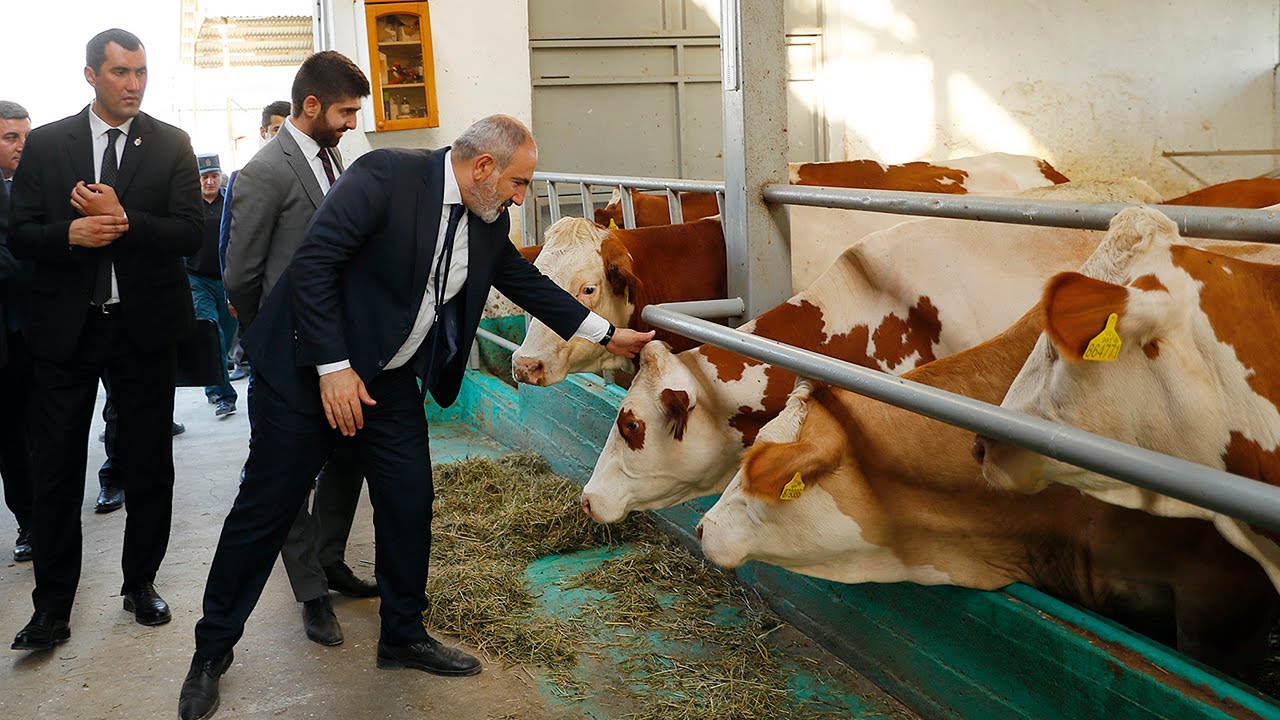
The government-initiated state support programme for the construction of small and medium-sized “smart” livestock barns, launched in 2019, has produced significantly fewer results than planned. Between 2019 and 2021, the state intended to construct or reconstruct 230 livestock barns under the programme, but by 2025, only 58 had been built. The reimbursements provided to farms failed to ensure the programme's intended progress, and the Ministry of Economy is now attempting, through the courts, to recover the millions of drams allocated from the state budget.
As Hetq reports, since 2022, the Ministry has been filing lawsuits against beneficiaries who failed to fulfil their contractual obligations. Ten lawsuits filed by the Ministry are available in the Datalex system. The amounts being claimed range from 11.5 to 17.5 million drams. The courts have granted seven claims, approved a settlement agreement in one case, and rejected the Ministry's claims in two cases.
The court cases show that the reasons for the programme's failure varied. Some beneficiaries did not build or operate the livestock barns, while others faced the wartime situation, a shortage of pastures, rising livestock feed prices, and difficulties in acquiring pedigree animals. The Ministry, however, has mainly based its actions on contractual requirements: maintaining the required number of livestock, ensuring that the livestock barn meets technological standards, and operating it for its intended purpose for at least five years.
In the case of Ararat Galstyan, a resident of Shinuayr, the court rejected the Ministry's claim to recover 11.5 million drams. Galstyan argued that, following the war, access to pastures in Syunik's border areas had become restricted, while rising livestock feed prices and the lack of financing had hindered the development of his farm. He also stated that he had resumed operating the farm in January 2024. The Ministry filed an appeal, but it was rejected. The case is now before the Court of Cassation.
In another case, the court rejected the claim for 17.5 million drams filed against Armen Gasparyan because the limitation period had expired. The Ministry should have known about the beneficiary's violations as early as January 2022, whereas it filed the lawsuit in February 2025, nine days after the statutory three-year period had expired. In this case, the state faced the risk of losing the money not only because the programme had not been fulfilled, but also because the Ministry had missed the legal deadline for filing the lawsuit.
The Ministry reached a settlement agreement with another beneficiary, Hayk Badalyan. In addition to the principal debt of 17.5 million drams, 1 million 864 thousand drams in accrued interest and 525 thousand drams in state fees were added. In total, approximately 19.9 million drams must be repaid by the beneficiary over seven years, by 2030.
In the case of Sevak Jarahyan, a resident of Gegharkunik Province, the court granted the Ministry's claim. The beneficiary had stated that he had spent a long time searching for pedigree cows with the required milk yield and had requested professional assistance from the Ministry. His request for additional time until the end of 2025 was rejected. The court ruled that the 17.5 million drams in compensation, the state fee, and the accrued interest be recovered.
The cases examined by Hetq also include restrictions caused by the coronavirus pandemic and martial law. Several beneficiaries presented these circumstances as reasons for failing to fulfil their obligations. The courts, however, did not accept these circumstances as force majeure. The court rulings noted that the contracts provided for the possibility of terminating them if extraordinary circumstances lasted for more than three months, but the beneficiaries had not submitted such requests.
Thus, the programme, which aimed to promote the development of livestock farming and improve agricultural productivity, resulted in the construction of only 58 livestock barns instead of the planned 230. And rather than evaluating the effectiveness of the state support, the Ministry is now forced to deal with the judicial recovery of the funds it had provided. The court cases also show that, in some instances, the state filed claims to recover the money on time, while in others, it missed the deadlines established by law.