
Suppliers to the Government: Who Benefits from the Government’s Representation Expenses?
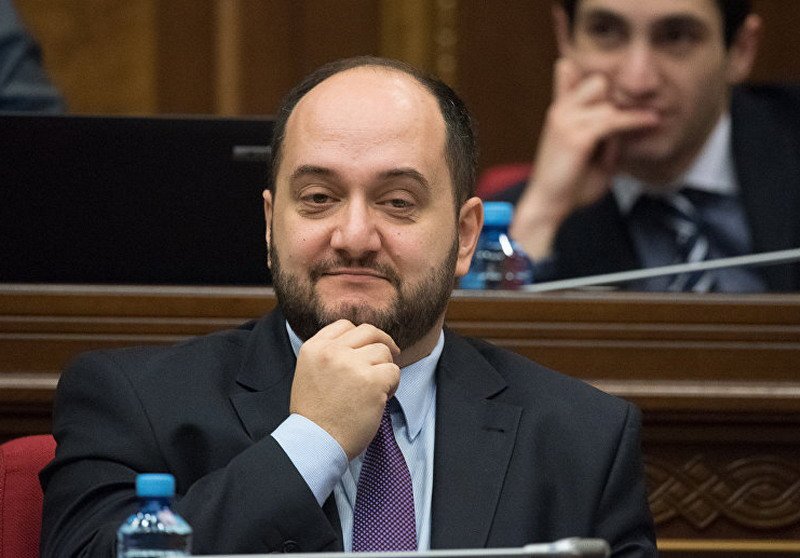
If the previous article was about contractors ensuring the organization of state events, conferences, and public ceremonies, then an examination of the Prime Minister’s Office’s representation expenses makes it possible to identify another group of regular suppliers.
These include food services, catering for official events, and other representation services, for which the Prime Minister’s Office allocates budgetary funds every year.
One such supplier is “BLIZARD,” a company specializing in catering services and event servicing. From the end of September 2020 to the present, the Prime Minister’s Office has signed 10 contracts with the company, totaling 17.45 million drams.
The most interesting aspect is the dynamics of the cooperation. Initially, the contracts were primarily for food services, and their amounts were relatively small. However, starting in 2022, the company began to be regularly involved in providing representation services, while the value of the contracts began to steadily increase. The largest contracts were signed in 2022 and 2024.
Another regular contractor of the Prime Minister’s Office is “Hayr ev Vordi Yeremyanner” [“Father and Sons Yeremyans”], headed by Davit Yeremyan, whom Armenian media outlets have called the “favorite oligarch,” meaning one of the closest representatives of the current government in the restaurant business.
If in the first years after the change of power the Prime Minister’s Office’s cooperation with the company was sporadic, its intensity noticeably increased after Arayik Harutyunyan was appointed Chief of Staff.
Overall, 25 contracts for representation services have been signed with the company, totaling more than 10.1 million drams. In 2026 alone, the Prime Minister’s Office has already signed six contracts with it, totaling more than 2.17 million drams.
For comparison, before Harutyunyan’s appointment, the scale of cooperation was considerably more modest: in 2018, one contract was signed for approximately 1.75 million drams; in 2019, one contract for up to 1.7 million drams; and in 2020, one contract for a symbolic amount of approximately 17 thousand drams.
The contracts for food services and representation services are not in themselves unusual for the Prime Minister’s Office. However, what draws attention is the tendency toward a steady concentration of orders among a limited circle of contractors, with whom cooperation clearly intensified after Arayik Harutyunyan assumed the position of Chief of Staff.