
The Interest-Free Privilege: What Is the Prime Minister’s Declaration Hiding?
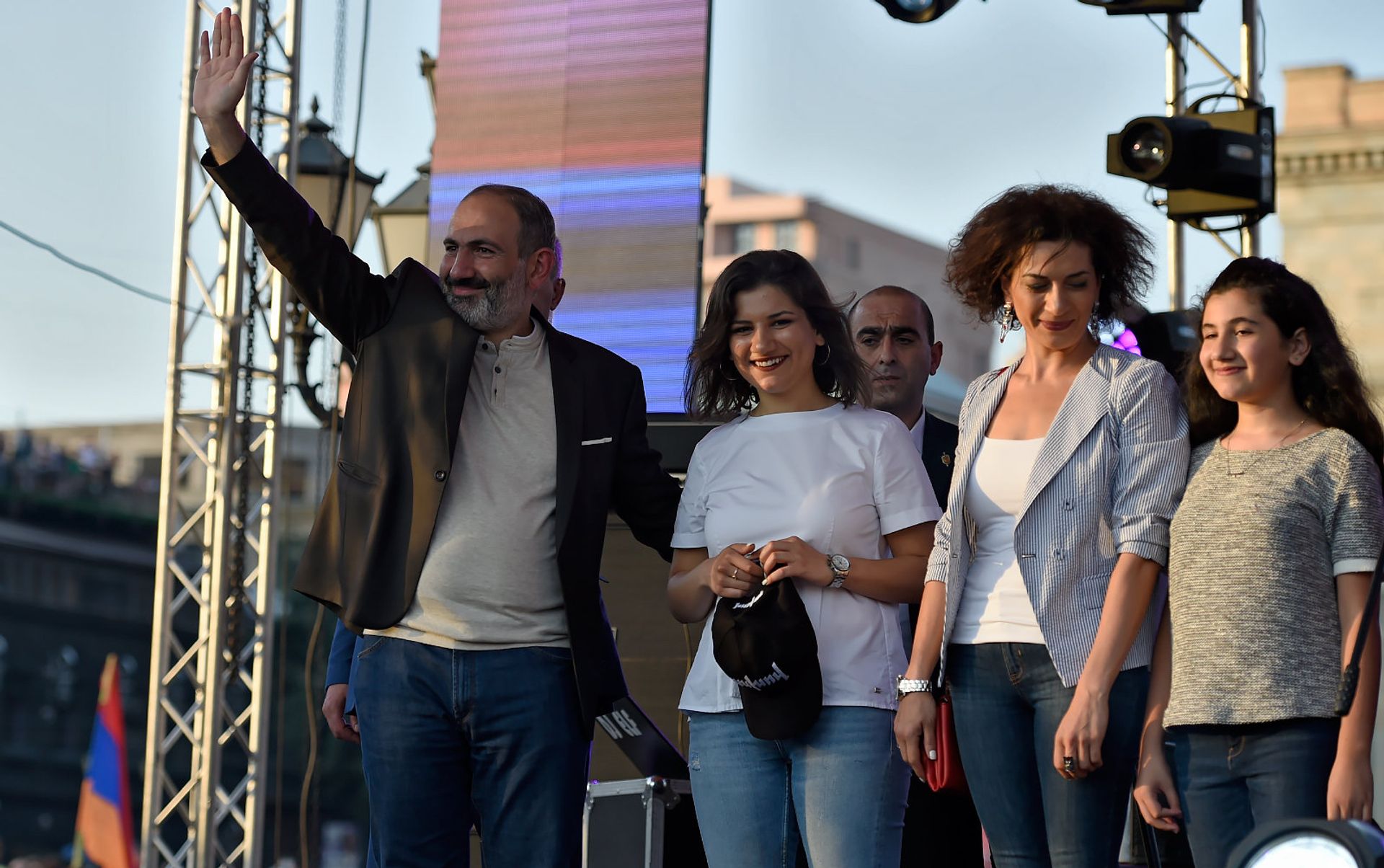
Nikol Pashinyan’s latest declaration of his family’s income and property for 2025, contrary to expectations of transparency, lays bare a system in which the ruling elite lives by different rules than the rest of the citizens. If a superficial glance sees only numbers, a careful analysis reveals mechanisms that in any other country would be considered alarming signs of corruption.
Let us begin with the most suspicious fact. Both the prime minister and his civil wife, Anna Hakobyan, declared interest-free loans, each amounting to 49 million 350 thousand drams, provided to the company “Ijevanatun.” In total, this is almost 100 million drams that the Pashinyan family transferred to a private legal entity without receiving any payment for the use of the capital. Think about it: amid inflation, when money loses value, any commercial organization charges interest to compensate for losses. Even trusted banks offer loans at annual rates of 12–15%. Who, other than people with administrative resources or unofficial influence, can obtain such terms? An ordinary Armenian entrepreneur or employee — never. An interest-free loan provided by an individual to a legal entity is not a market transaction, but an act of a non-market nature. And when the prime minister does this, a question arises: is “Ijevanatun” a tool for withdrawing or cashing out funds that later return to the family through other channels?
Pashinyan’s income amounted to 37.6 million drams, of which 27 million was salary and bonuses. The rest consisted of a tax refund, a small loan, and the valuation of an inherited house. But how can he, with such income, provide large interest-free loans while simultaneously spending 6.2 million on repaying other loans? If his salary is approximately 2.5 million per month, then after paying taxes and ordinary living expenses (family, transportation, utilities), only a negligible amount remains. Logic suggests that either his actual income significantly exceeds the declared amount, or the loans provided to “Ijevanatun” are fabricated, concealing other movements of funds.
Anna Hakobyan, for her part, received 32.8 million drams during the year. The main portion — 21.7 million — came from the “My Step” Foundation, which is associated with the ruling party. This foundation was created for charitable purposes, but for some reason its funds periodically reach the prime minister’s wife. Next comes 1.8 million in in-kind income from the Qatara Foundation (what kind of income this is is not specified), and another $6,500 for an “expensive purchase,” which is not identified. The impression is that the declaration deliberately leaves gaps: one can state the amount without disclosing its nature. And the law requiring transparency allows such silences. For an ordinary citizen, this would be a violation: the tax authorities would demand an explanation. For the prime minister’s family — the norm.
It is noteworthy that Nikol Pashinyan did not own real estate at the beginning of the year, while by the end of the year he had acquired half of a house through inheritance from his father. A person who has already led the country for several years cannot accumulate enough money to purchase his own apartment, but at the same time freely distributes million-dram interest-free loans. This contradiction is obvious. Either his official income represents only a small part of the actual situation, or the financial flows are so tangled that it is impossible to trace them.
The elder daughter, Mariam, has started a business, and her income also partly consists of funds received from the same “My Step” Foundation. The younger daughter, Shushan, works as a teacher and honestly receives a modest salary — the only member of the family whose income raises no questions. But the overall picture is this: almost all significant inflows come from structures directly or indirectly connected with the government or from external sources of a non-transparent nature.
The system of interest-free loans is a classic sign of corruption, when an official uses their position to obtain non-market privileges. In this case, the prime minister and his wife provide loans to a company that presumably belongs to trusted persons or to themselves through nominal owners. On the other hand, there may be the receipt of services, goods, or cash from the same company without this being reflected in the declaration. This cannot be proven on the basis of the declaration alone, but the suspicions are more than justified.
Pashinyan’s government came to power with slogans of fighting corruption and oligarchy. However, his family’s declarations show that the old methods have not disappeared anywhere: they have merely been transformed. Interest-free loans, hidden purchases, unexplained in-kind income, gifts being handed over to the state without confirmation — all of this resembles an attempt to preserve the form while abandoning the substance. Armenian citizens, who fill out declarations and pay taxes every year, have the right to ask: why does the prime minister live by special rules? And why can his family afford what is unavailable to any ordinary person? For now, there is no answer, and this undermines trust in the idea of transparent government.