
“Hraparak”: Avinyan collects cigarette butts from the streets, while his municipality collects small businesses’ money
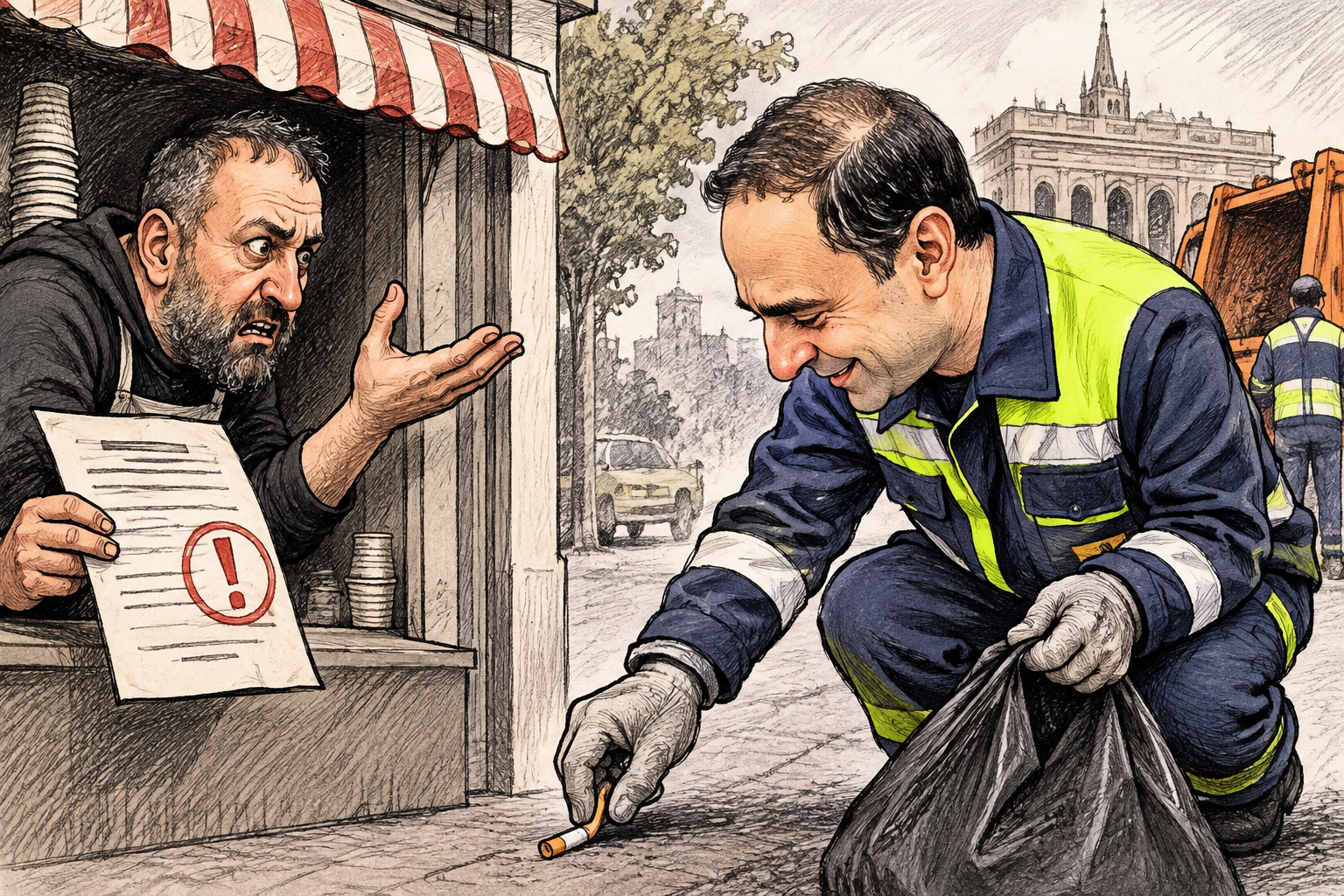
Yerevan Mayor Tigran Avinyan has a rather distinctive idea of establishing cleanliness and order in the capital. He himself regularly goes out into the streets wearing the uniform of a municipal services worker, takes on the role of a caring city leader, collects cigarette butts, and participates in staged cleaning activities. Meanwhile, the municipality he heads seems to have found a much more effective way of “cleaning up” the city — by emptying the pockets of small entrepreneurs.
As the daily newspaper “Hraparak” reports, several owners of public catering establishments in Yerevan have contacted the editorial office, saying that recently they have started receiving notifications of fines en masse. The official basis for the fines is allegedly operating after midnight without the appropriate notification required to switch to a different tax regime. Indeed, a special tax regime is established for public catering establishments operating at night. However, the entrepreneurs claim that there has never been any nighttime work at their establishments: the businesses closed no later than 8 p.m.
The fines amount to AMD 200,000–300,000. For a large commercial chain, this is perhaps a trivial sum that the accounting department can simply include among current expenses. For a small family business, however, this amount is a serious blow that can wipe out the entire profit from several weeks of work. We are talking about businesses that have neither legal departments nor in-house lawyers, let alone the financial ability to engage in years of legal wrangling with state institutions.
It is also noteworthy how, according to the entrepreneurs, the municipality responds to attempts to appeal the fines. Are you demanding evidence? Do you disagree with the accusation? Fine, go to court. What a convenient position for the bureaucratic apparatus: first, present a person with a bill, and then suggest that they prove at their own expense that they have committed no violation. Meanwhile, a lawyer’s fee can come close to the amount of the fine itself. The result is an almost flawless arithmetic of administration: even if the entrepreneur is right, they still have to pay to prove that they are right.
This is what the city authorities’ care for entrepreneurship looks like: with one hand, they call on people to create jobs, pay taxes, and develop the economy, while with the other, they impose fines for an activity that the businesses did not engage in at all. Moreover, the smaller the business, the easier it is to drag it into this financial lottery. A large company can afford the luxury of keeping lawyers on staff, while the owner of a shawarma shop, apparently, is forced to choose between paying a lawyer and buying meat.
Avinyan, of course, knows better how to run Yerevan. But the urban economy is not a stage, and the mayor’s office is not a role as a servant of the people. One can put on a work uniform, pick up a cigarette butt from the ground in front of a camera, and secure beautiful photographs. But if the municipality’s staff turns its relations with small businesses into a hunt for fines, no staged cleaning will save the city authorities’ reputation. Collecting cigarette butts from the streets is not difficult. Much more difficult is uprooting from the municipality the bureaucratic habit according to which someone else’s pocket is a convenient source for filling the budget.