
Where Did the AMD 5 Billion Allocated to Artsakh Go? Arthur Hambardzumyan’s Revelations and the Silence of Law Enforcement
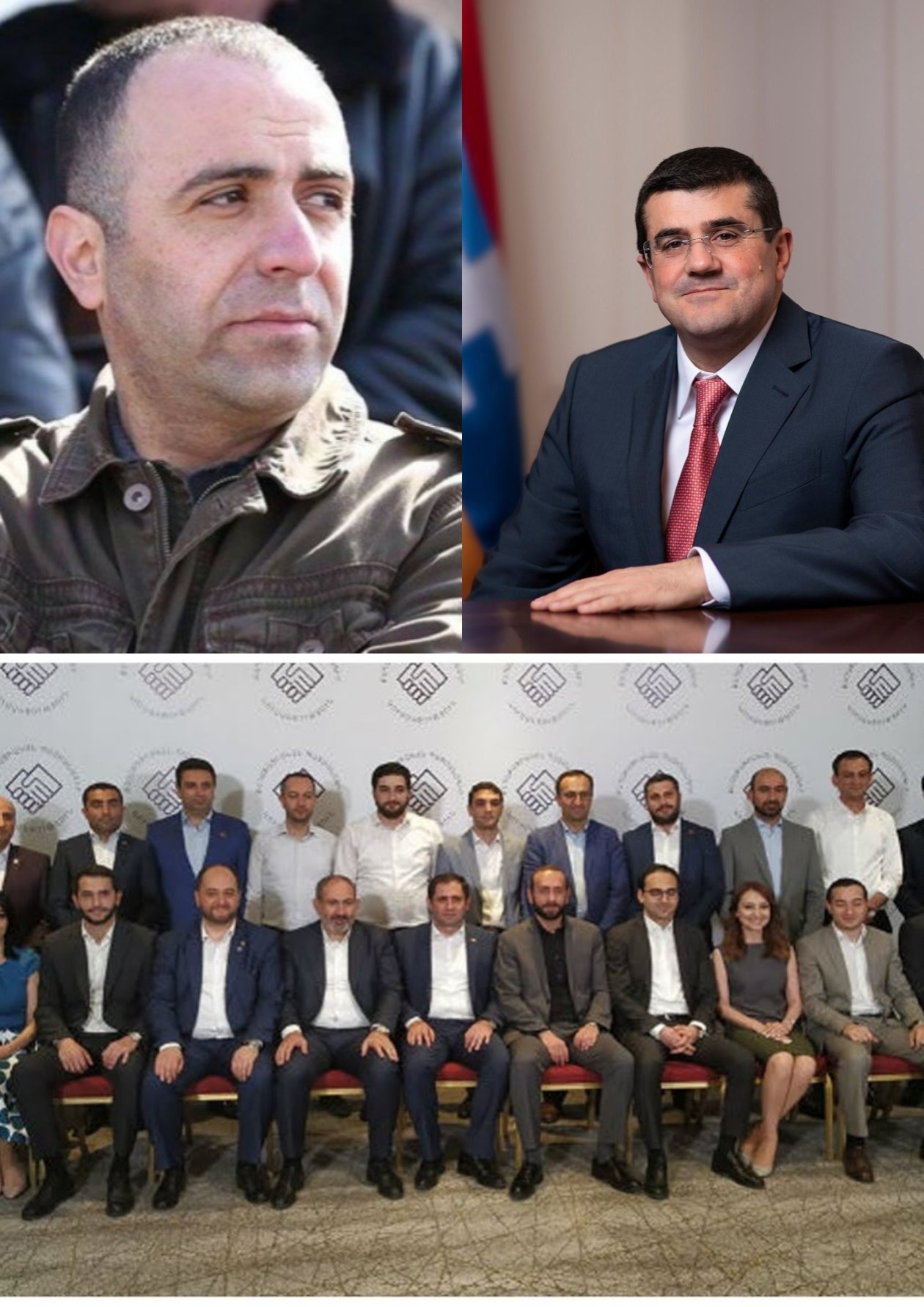
As strange as it may sound, amid endless political performances, mutual accusations, highly publicized arrests, and the never-ending talk in Armenia about the “rule of law,” there is one issue that the authorities seem to prefer simply ignoring. It concerns the systematic publications of Arthur Hambardzumyan, a man who for years has consistently made public information concerning high-ranking representatives of the country’s political leadership, accompanying it with specific names, circumstances, and extremely serious allegations.
AND WHAT IS MOST NOTABLE HERE IS THE ABSOLUTE SILENCE FROM THOSE TO WHOM THESE PUBLICATIONS ARE ADDRESSED. There are no lawsuits seeking protection of honor and dignity. There are no convincing denials. There are no publicly released documents that would definitively settle the matter. There is only conspicuous silence, which seems increasingly strange after every new post and publication.
The latest occasion for such questions was Hambardzumyan’s recent social media post concerning Armenia’s Minister of Foreign Affairs, Ararat Mirzoyan. According to the author, in December 2022, Mirzoyan acquired a luxury private residence. Purchasing real estate is not, in itself, a crime. However, the circumstances that followed are already difficult to regard as a coincidence.
According to Hambardzumyan, just a few months before the acquisition of the residence, the then-President of Artsakh, Arayik Harutyunyan, allegedly complained in a narrow circle that the AMD 5 billion allocated to Artsakh had not actually reached its destination because, after signing the necessary documents, he had left the funds with representatives of the political leadership of the Civil Contract party. Moreover, Hambardzumyan identified General Vitaly Balasanyan as a witness to that conversation.
These statements require either a public denial or proper verification by law-enforcement authorities.
HOWEVER, IT SEEMS THAT THE AUTHORITIES PREFER A THIRD OPTION: PRETENDING THAT NOTHING HAPPENED.
Another circumstance adds further weight to this story, one that Hambardzumyan himself draws attention to. He recalls a statement made by Ararat Mirzoyan in 2018 that after the “revolution,” the “era of high walls” had come to an end in Armenia. At the time, representatives of the new authorities spoke with great pathos about modesty, transparency, and a new political culture.
Only a few years have passed, and information is now circulating about luxury private residences and billions of AMD in financial flows. A coincidence? Possibly. But that is precisely why law-enforcement authorities exist — to distinguish coincidences from possible crimes.
But the most surprising part is something else. After all, this publication is by no means the first.
Over the past several years, Arthur Hambardzumyan has repeatedly published material concerning representatives of the Civil Contract party, government officials, and high-ranking officeholders. The topics are almost always the same: the staging of the “Velvet Revolution,” betrayal of national interests by Nikol Pashinyan and his team, corruption, illicit enrichment, conflicts of interest, elite real estate, and the origins of large sums of money.
AND EVERY TIME, THE SAME SCENARIO REPEATS ITSELF.
After a publication, there is absolute silence. No one comes before journalists with documents. No one files a defamation lawsuit. No one calls for the author to be held criminally liable for spreading false information.
Naturally, the question arises: why?
If Arthur Hambardzumyan is knowingly spreading false information, then why has he not been held accountable under the law to this day? The Criminal Code contains relevant provisions. There is also established judicial practice concerning the protection of honor and dignity.
If, however, even part of the published information corresponds to reality, then an entirely different question arises: why have the Investigative Committee, Anti-Corruption Committee, Prosecutor’s Office, and other state institutions shown complete indifference for years toward the extremely serious allegations made publicly?
THIS PAINTS A RATHER INTERESTING PICTURE.
A former government official can be arrested on the basis of a Facebook post. Any opposition figure can be summoned for questioning over statements that are considerably milder. Any critical statement directed at the current government immediately becomes the subject of intense activity by law-enforcement authorities.
Yet when it comes to publications in which representatives of the authorities themselves are mentioned, the entire state justice system seems to disappear.
There are no preliminary investigations. There are no reports of materials being registered. There are no official clarifications. There is not even a basic statement from press services saying that the published information is untrue.
Such silence inevitably gives rise to various theories.
Either the authorities are convinced that the publications are so absurd that they do not deserve any response. But such an explanation no longer works when dozens of similar reports have remained unanswered for years.
Or the people to whom the publications are addressed simply have no interest in taking the matter to court, because any full investigation would inevitably require examining the origins of property, financial flows, declarations, and numerous other circumstances, while at the same time drawing unnecessary public attention to them.
Finally, there is also a third possibility: the law-enforcement system has ultimately lost its independence, and the question of whom to investigate and whom to ignore has long been determined not by the law, but personally by Nikol Pashinyan.
This conspicuous silence today leaves a considerably stronger impression than Arthur Hambardzumyan’s publications. Because sometimes silence truly becomes the most eloquent answer.