
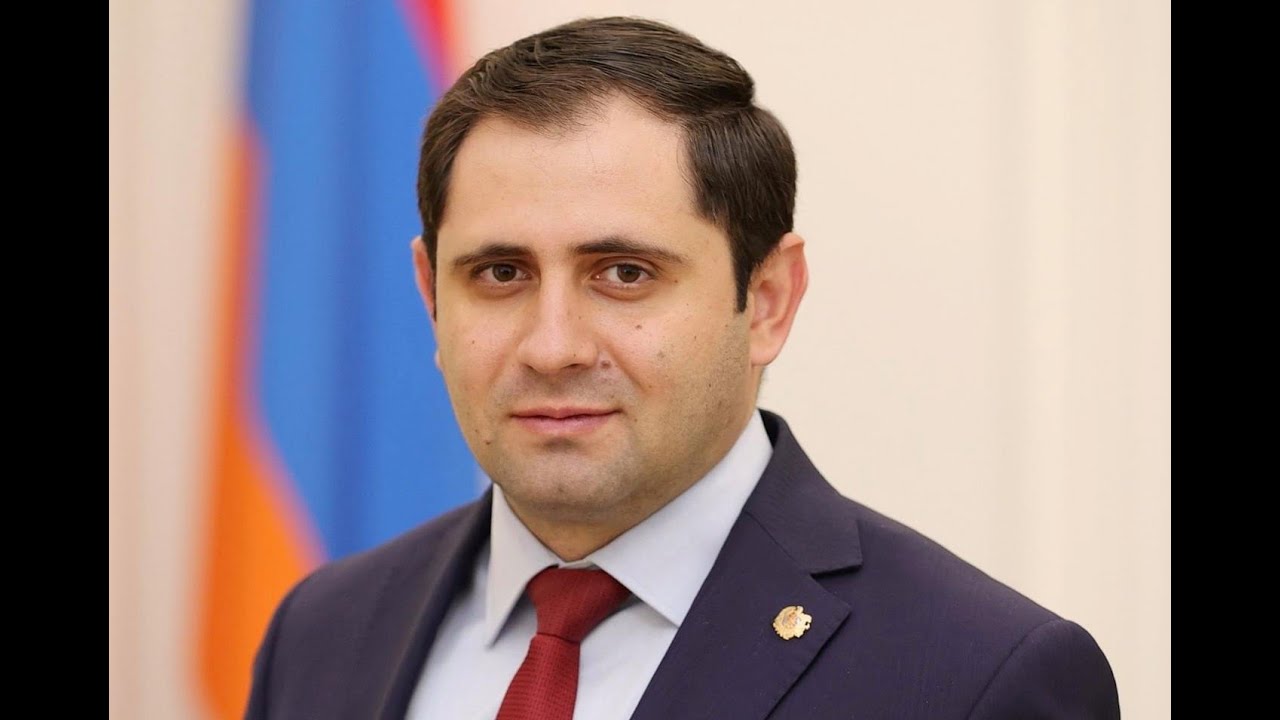
"THE SCHOOLMARM" OF THE DEFENSE MINISTRY: MONEY, REFORMS AND SUREN PAPIKYAN'S SYSTEM
Suren Papikyan is one of the most discussed and controversial figures in post-revolutionary Armenia. Born on April 26, 1986, in Stepanavan, Papikyan is a historian by education. From 2003 to 2010, he studied at the History Faculty of Yerevan State University, then completed his master’s degree, and from 2012 to 2016 studied in the doctoral program at Saint Petersburg State University. Before entering politics, he worked as a history teacher at Yerevan School No. 54 and at the “Quantum” School. However, within just a few years, the former teacher became Armenia’s Minister of Defense, heading a system that had emerged from war and a security crisis.
One of the most discussed pages of Papikyan’s biography is connected with his conviction. In 2020, Hraparak.am published information according to which, during his compulsory military service, he had been convicted of using violence against a commander. According to the publication, on March 27, 2006, the 5th Garrison Military Court sentenced him to two years and three months of imprisonment, and on February 23, 2007, he was released under an amnesty. Papikyan later confirmed the fact of his conviction but denied reports about an attack with a knife, stating that the incident was related to non-statutory relations and an insult to national dignity.
The issue of the conviction turned into a separate political scandal. On February 28, 2020, NSS Colonel Serob Harutyunyan was charged with organizing the leak of information concerning Papikyan’s conviction. The case later collapsed, and Harutyunyan was acquitted. However, in 2021, a lawsuit was filed against him seeking the confiscation of property of illicit origin. Harutyunyan himself later stated that he linked the prosecution to the Papikyan story.
Papikyan’s political rise began after the 2018 “Velvet Revolution.” He was one of Nikol Pashinyan’s close team members and one of the organizers of the Gyumri–Yerevan march. On May 11, 2018, he was appointed Minister of Territorial Administration and Development; in the summer of 2021, he became Deputy Prime Minister, and already in November 2021, he was appointed Minister of Defense. His career is often presented as one of the most striking examples of the “social elevator” of the post-revolutionary authorities.
After becoming a minister, Papikyan’s financial situation changed significantly. While in 2018 his declared income amounted to approximately 8.8 million drams, by 2022 it had already reached 139 million drams. During that period, declarations showed loans exceeding 78 million drams, gifts worth tens of thousands of dollars and euros, as well as a loan of 75.5 million drams connected with the “Jermuk Group” company. Papikyan also acquired real estate in Yerevan’s Arabkir and Kentron administrative districts.
In 2022, the Minister of Defense purchased an apartment for $168,000 in the “Byuregh” elite complex under construction on Arshakunyats Avenue in Yerevan. The transaction was financed through Hayekonombank, which is associated with the family of MP Khachatur Sukiasyan. Media outlets noted that the market value of similar apartments could reach up to $412,000. Other representatives of the authorities also own apartments in the same complex, including Arayik Harutyunyan, Lilit Makunts, Trdat Sargsyan, and a number of MPs from the ruling team.
Papikyan’s family also came under media attention. His wife, Armine Muradyan, had previously been Papikyan’s press secretary and was later appointed Deputy Director of the Armenian Territorial Development Fund. Their wedding, held in January 2022, attracted wide attention. According to the media, the event could have cost $100,000–150,000. The wedding was organized at the “Pharavon” restaurant complex and attended by around 650 guests, including high-ranking officials and businessmen.
The appointments of people from Papikyan’s circle also became a subject of public criticism. His wife’s brother, Armen Muradyan, was appointed an adviser on logistics at HayPost in 2022, despite lacking relevant experience. There were also appointments within the Ministry of Defense from Papikyan’s former team: Lilit Makunts’s brother, Vahe Makunts, became his assistant and was later involved in several companies engaged in sand extraction.
During Papikyan’s tenure, the state procurement system also came under criticism. On January 25, 2024, by a government decision, a significant portion of the Ministry of Defense’s procurement was classified. Procurement plans, supplier information, and technical specifications were classified as state secrets. Despite this, criminal cases concerning construction contracts, bribes, and embezzlement on an especially large scale were periodically made public. In 2025, a case was sent to court according to which MoD officials had received millions of drams in bribes from contractors for accepting substandard work.
Large contracts of the Ministry of Defense also became a subject of discussion. “Max Oil” received contracts worth billions of drams for the supply of aviation and diesel fuel, while “CPS” and “Mega Trade” became major suppliers to the Ministry of Defense. “Domino Video Production” received a contract worth approximately 419 million drams for organizing the May 28 event. All of this raised additional questions regarding the transparency of public spending.
One of the most serious episodes during Papikyan’s tenure was the tragedy that occurred on January 19, 2023, in the village of Azat in Gegharkunik Province, when 15 servicemen were killed as a result of a fire that broke out in a military barracks. After the incident, a number of military personnel were dismissed, but demands for Papikyan’s resignation were rejected. Relatives of those killed continue to demand that the country’s top leadership be held accountable.
Another important issue was the delay in army reforms. Papikyan announced the introduction of a new military uniform as early as 2023, but as of 2026, the program was still in the testing stage. At the same time, the authorities announced the construction of “border fortresses,” while the opposition raised issues concerning security and the transparency of tenders.
In 2026, the Ministry of Defense also entered into conflict with the Armenian Apostolic Church. By Papikyan’s order, the spiritual service of the armed forces, which had operated since 1997, was dissolved. Critics of the authorities assessed this as a move to push the Church out of the army, while the Ministry stated that only a structural reorganization was being carried out.
Overall, Suren Papikyan’s tenure has been accompanied by constant discussions surrounding financial growth, personnel appointments, closed procurements, high-profile scandals, and delayed reforms. His image has become one of the most characteristic examples of the post-revolutionary power system in Armenia, where political loyalty has often played a greater role than professional experience.